Article visual
The guide in one frame.
Four Seasons Tented Camp Golden Triangle sells stays as two-, three-, or four-night all-inclusive packages, not nightly rates.
Four Seasons Tented Camp Golden Triangle sells stays as two-, three-, or four-night all-inclusive packages, not nightly rates. Here's what that structure actually buys, and how to choose a length.
Paid partner link - VIAIVE may earn compensation at no additional cost to you.
Most Four Seasons properties price the way most hotels price: a nightly rate, a room category, a set of amenities you can use or ignore.
Four Seasons Tented Camp Golden Triangle doesn't work that way, and understanding why changes how you should plan the trip.
Most Four Seasons properties price the way most hotels price: a nightly rate, a room category, a set of amenities you can use or ignore.
Why a Stay at Four Seasons Tented Camp Golden Triangle Is Booked in Nights, Not Room Rates works best when the specifics above match the trip; when they don’t, use Plan With VIAIVE rather than treating this as a final call.
Paid partner link - VIAIVE may earn compensation at no additional cost to you.
| Decision point | Primary path | Alternative path |
|---|---|---|
| Traveler decision | Most Four Seasons properties price the way most hotels price: a nightly rate, a room category, a set of amenities you can use or ignore. | Use correspondence when the itinerary has constraints the public page cannot resolve. |
| Best use case | Introduction | A package, not a room rate |
| Commercial path | Use disclosed partner modules when public rate windows matter. | Use VIAIVE correspondence when the placement, room category, or routing needs human judgment. |
Four Seasons Tented Camp Golden Triangle sells stays as two-, three-, or four-night all-inclusive packages, not nightly rates.
Four Seasons Resort The Nam Hai has no standard hotel rooms — all 100 accommodations are private villas on Ha My Beach, between Hoi An's old town and Da Nang.
Four Seasons Resort Koh Samui has no standard hotel rooms — all 71 keys are hillside pool villas built into a former coconut orchard, with a working Muay Thai ring and an elemental-philosophy spa.
Four Seasons Resort Chiang Mai is built around an active rice farm in the Mae Rim Valley — guests plant rice, bathe water buffalo, and breakfast in the fields.
19 July 2026
VIAIVE weighs ship, itinerary, cabin category, and route fit against the traveler profile before naming a traveler decision.
Disclosed Stay22 partner paths appear once near the close of the guide, with sponsored nofollow labeling and affiliate disclosure.
Four Seasons Tented Camp Golden Triangle sells stays as two-, three-, or four-night all-inclusive packages, not nightly rates. Here's what that structure actually buys, and how to choose a length.
Most Four Seasons properties price the way most hotels price: a nightly rate, a room category, a set of amenities you can use or ignore. Four Seasons Tented Camp Golden Triangle doesn't work that way, and understanding why changes how you should plan the trip.
Most Four Seasons properties price the way most hotels price: a nightly rate, a room category, a set of amenities you can use or ignore. Four Seasons Tented Camp Golden Triangle doesn't work that way, and understanding why changes how you should plan the trip.
The camp, on the Ruak River in Chiang Rai's Golden Triangle, opened in 2006 as Four Seasons Hotels and Resorts' first all-inclusive property — a structural distinction that has defined it for the two decades since, through its 20th anniversary in 2026. Stays are sold as two-, three-, or four-night packages rather than a per-night rate you build a stay around. Book two nights, three nights, or four, and the package — not a nightly quote — is what you're actually purchasing.
That single decision reshapes almost everything else about the property. There's no "just the room" option, no minibar bill, no separate line item for the boat excursion. Meals, beverages including house wines and spirits, a Golden Triangle excursion by long-tail boat to a local temple, market, and viewpoint, and at least one spa treatment are built into every package length. The three- and four-night versions add a choice of private tasting experience, a further activity such as a hike, a bicycle tour, or a local weaving session, and a private sundowner. What changes as you extend the stay isn't the base experience — it's how much room there is to add a second or third distinct activity without repeating yourself.
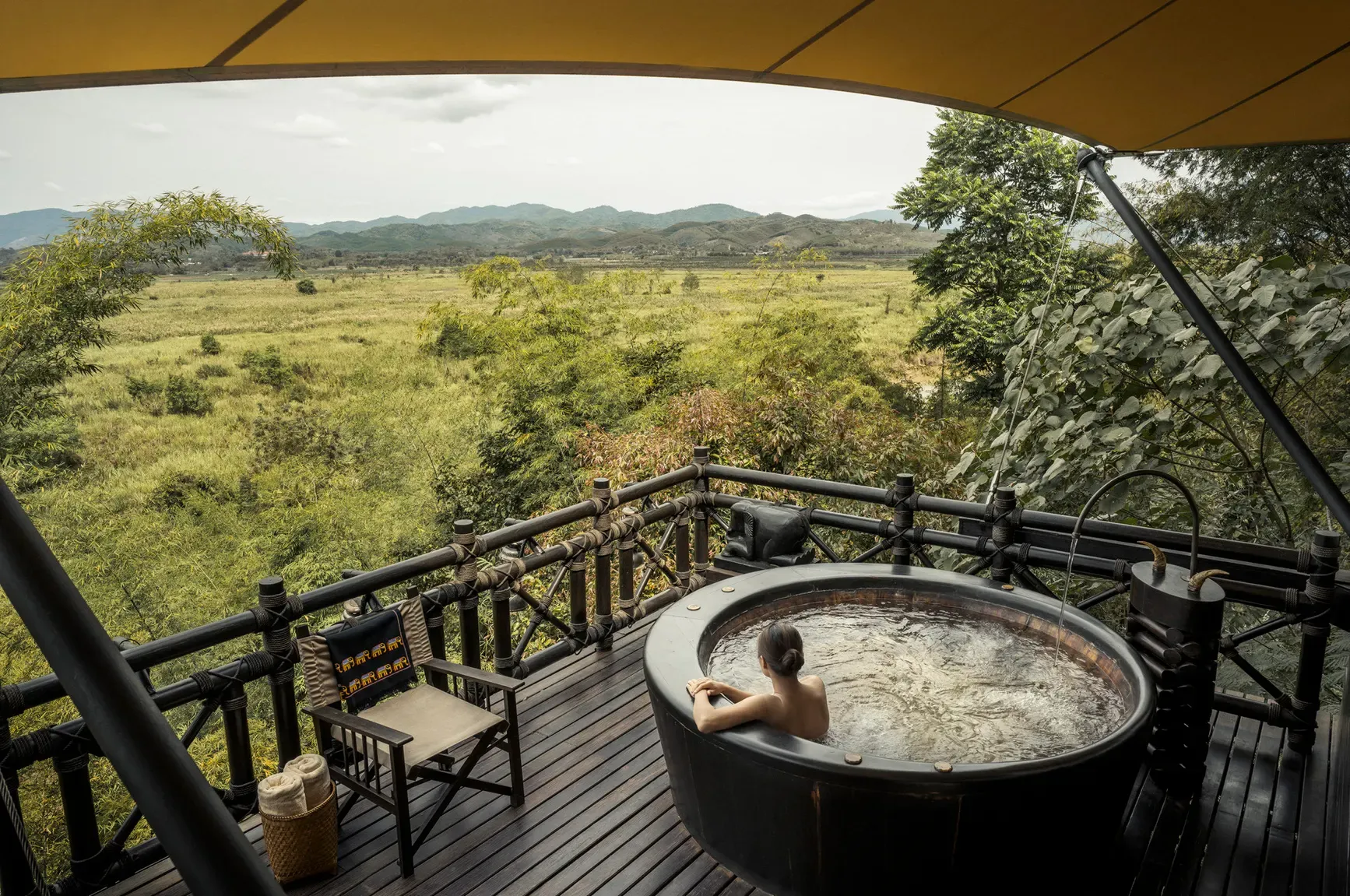
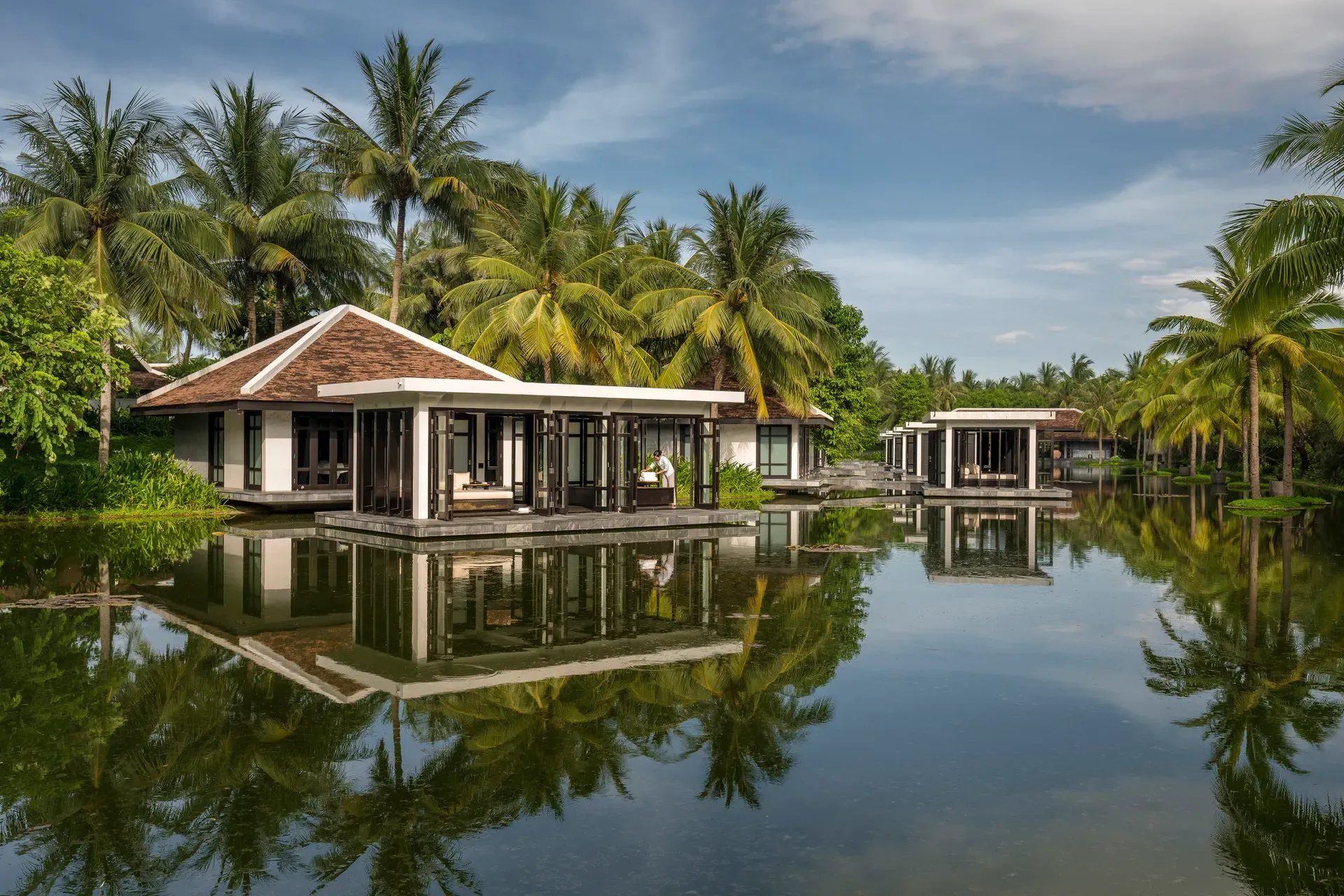
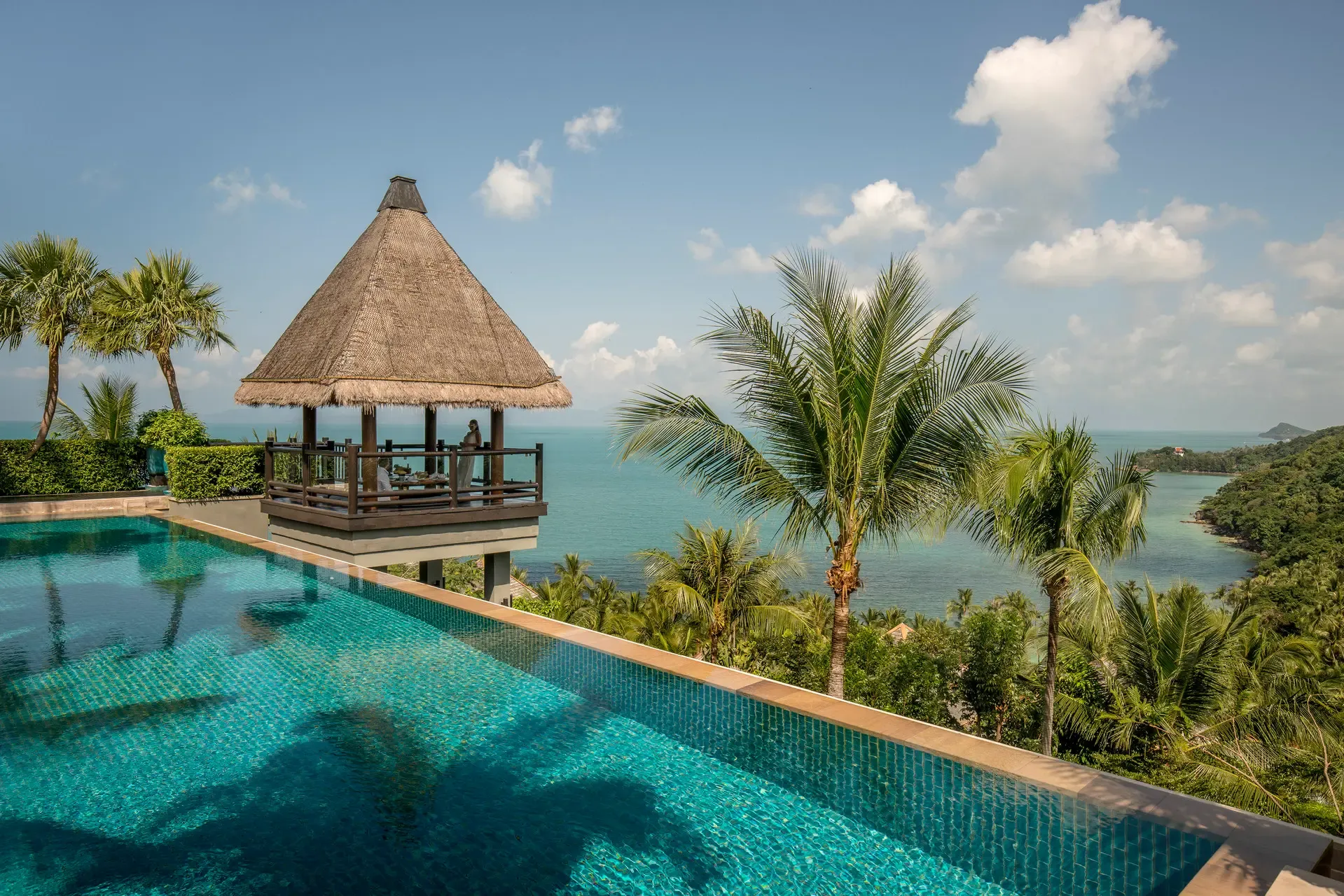
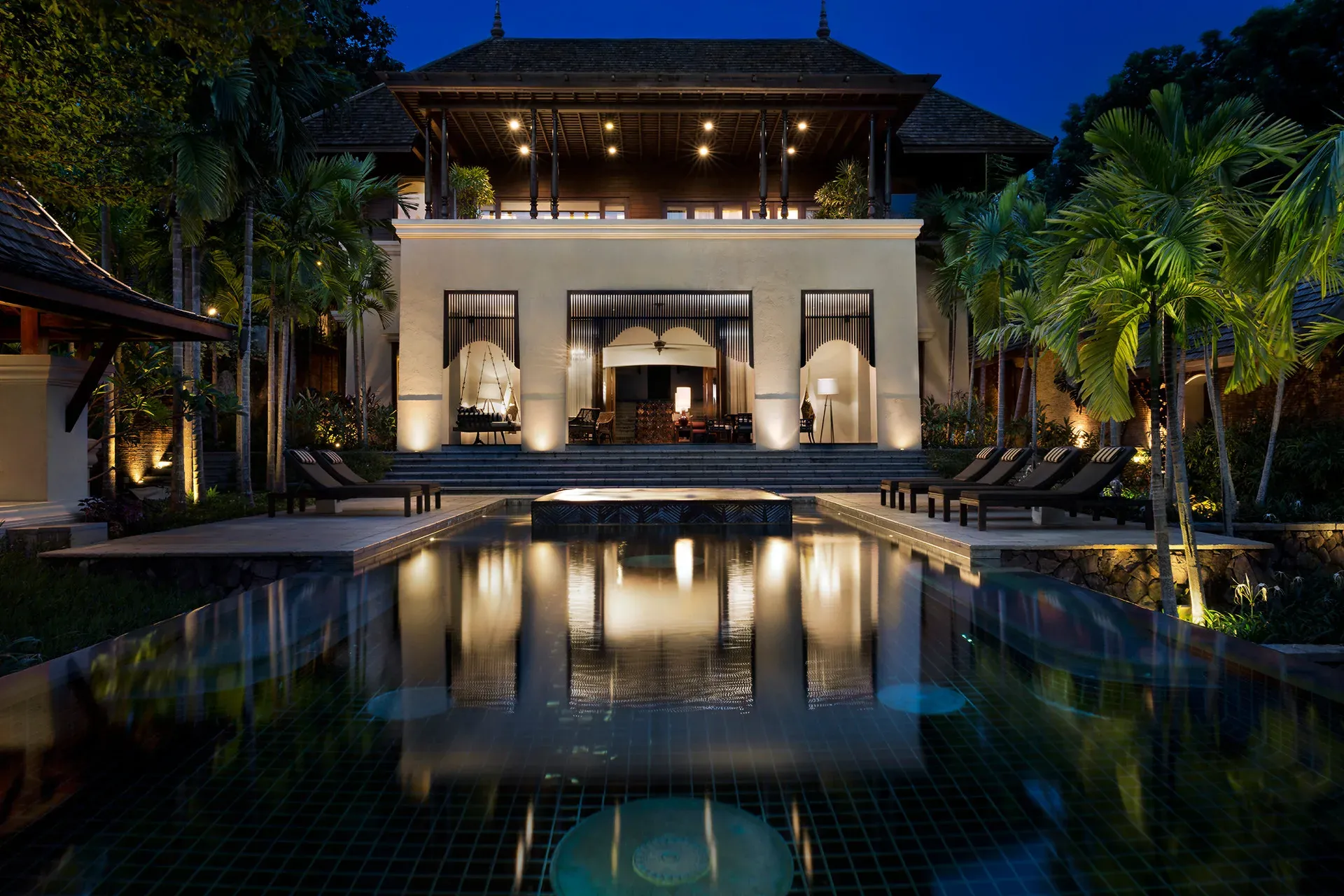
The all-inclusive model isn't an arbitrary pricing choice — it maps onto how remote and how deliberately paced the camp actually is. There's no direct road to the property. Guests fly into Mae Fah Luang Chiang Rai International Airport, take a roughly hour-long car transfer to the Hirannakorn Pier on the Ruak River, and finish with a short boat ride upriver to the camp itself. That arrival sequence alone takes a meaningful piece of a short trip, which is part of why the shortest standard package is two nights rather than one: a single overnight would spend most of its time in transit rather than at the camp.
Once you're there, the day-to-day rhythm is built around a fixed cast of experiences rather than an open activity menu. Elephant time is the clearest example. The camp works with the Golden Triangle Asian Elephant Foundation, which has rescued and rehomed more than 20 elephants from Thailand's cities, and elephant encounters are woven into the standard schedule rather than sold as an optional excursion — guests are introduced to elephant etiquette and anatomy by camp guides, then spend time directly with the mahouts who care for the herd, including bathing and, on some itineraries, a walk through jungle and grassland to the river. Dining follows the same logic: Nong Yao, the camp's main restaurant, serves scheduled meals of Thai, Laotian, and Burmese cooking in an open-sided pavilion, and Burma Bar handles sundowners with river views, both included rather than itemized.
Two nights is the entry point and works if the goal is a genuine but compact taste of the format — one elephant session, one river excursion, one spa treatment, and out. Three nights adds real breathing room: a second distinct activity (a private tasting, for instance) alongside the standard excursion and elephant time, without the trip feeling like a single long day repeated. Four nights is the version built for people who want to actually settle into camp life rather than sample it — an additional off-site activity choice (hiking, cycling, or a local craft session), a private sundowner experience, and enough unstructured time between scheduled moments that the pace stops feeling like an itinerary and starts feeling like a stay.
The accommodations reinforce this. All 15 standard tents — Bamboo, Mekong, and the five Golden Triangle Tents, which add a private outdoor hot tub — share the same 54-square-metre footprint and sleep two, so length of stay, not room category, is the main lever for shaping a longer or shorter trip. The one exception is the Explorer's Lodge, a separate two-bedroom, 232-square-metre accommodation with its own private infinity pool, built for families or small groups traveling together rather than as an upgraded couple's tent — worth knowing about specifically if more than two people are traveling, since it sits outside the standard tent inventory entirely.
The structure that makes this camp distinctive is the same structure that makes it a poor fit for a quick stopover or for travelers who want to opt out of the schedule and simply use a pool for a few days. There's no way to book "just the tent" here, and the arrival logistics alone argue against anything shorter than two nights. What you're buying with a longer package isn't more square footage or a better tent category — every standard tent is functionally identical — it's more time inside a fixed, elephant-centered, river-bound rhythm that the camp has run largely unchanged since 2006. For the traveler who wants exactly that, the package structure is a feature. For anyone who wants flexibility to build their own itinerary hour by hour, it's worth knowing going in that this camp isn't built for that kind of stay.
Four Seasons Resort The Nam Hai has no standard hotel rooms — all 100 accommodations are private villas on Ha My Beach, between Hoi An's old town and Da Nang. Here's what that structural choice actually changes about a stay.
Four Seasons Resort Koh Samui has no standard hotel rooms — all 71 keys are hillside pool villas built into a former coconut orchard, with a working Muay Thai ring and an elemental-philosophy spa. Here's what that structure actually changes.
Four Seasons Resort Chiang Mai is built around an active rice farm in the Mae Rim Valley — guests plant rice, bathe water buffalo, and breakfast in the fields. Here's why the setting, not the room category, is the real decision.
Field Intelligence Letter
A short monthly note on hotel openings, route shifts, seasonal timing, and the stay decisions worth making early.
One letter per month. Unsubscribe at any time. No sharing, no resale. Privacy Policy.
When a piece here makes you want to move, write the first few lines.
Plan With VIAIVE ↗