The ship, read as a route decision.
A cruise is not the default arrangement — it is the answer when the vessel solves the itinerary, the family mix, the pace or the access problem better than a hotel chain does. VIAIVE compares the line against the reason before it names the cabin.
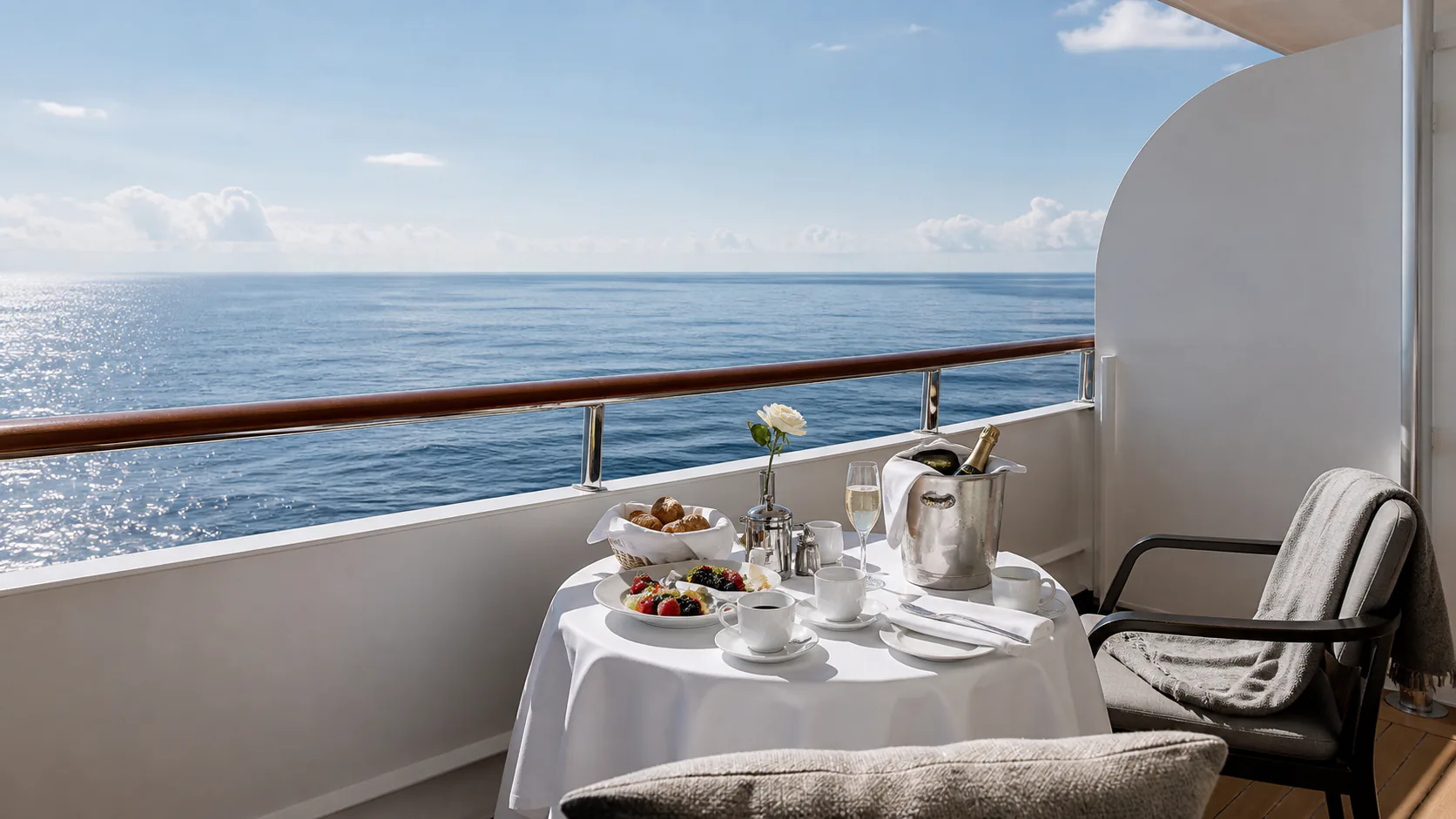 Comparison live nowSilversea vs. Regent Seven Seas
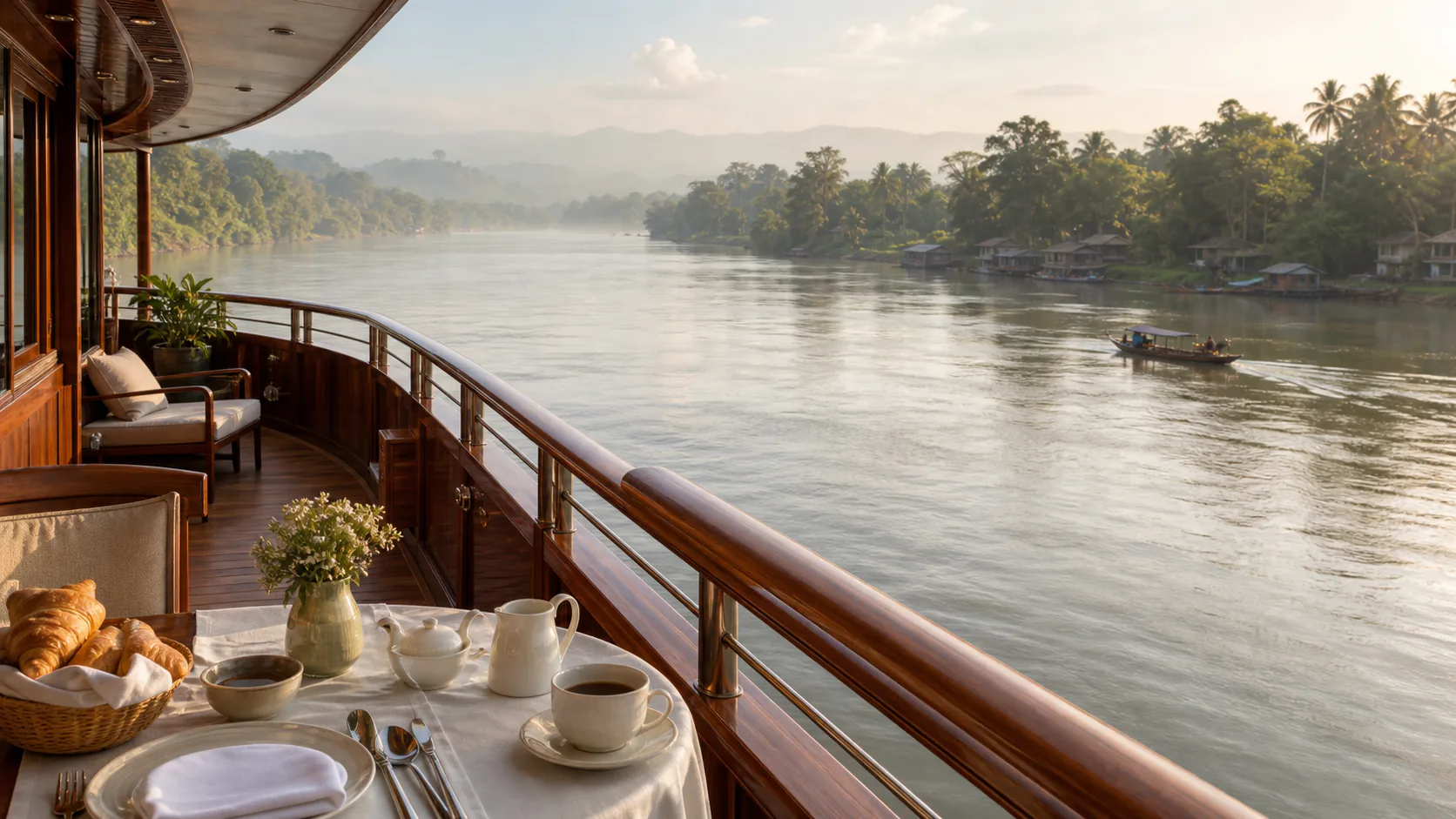 River route live nowViking Mekong — Cambodia to Vietnam
Book the room before the ship.
Live rate comparison covers rooms, not cruise fares — so the fare below runs through a trip request, and the hotel does not have to. These are reviewed VIAIVE properties in the port cities the routes on this page sail from and through.
Paid partner link - VIAIVE may earn a commission at no additional cost to you.
- Tokyo
Aman Tokyo
Eighty-four rooms occupy the upper floors of Otemachi’s Pacific Century Place, a mountain-quiet Aman inside a financial tower a short walk from Tokyo Station. Travelers who want the city’s stillest luxury rooms, with deep soaking tubs and a paper-screen hush, while keeping Imperial Palace and Marunouchi on a short car ride.
- Bangkok
Ascott Embassy Sathorn Bangkok
Work-anchored Bangkok stays that need serviced-apartment living space rather than a standard hotel room, and Sathorn positioning for Silom, Lumphini, the embassy cluster, One Bangkok, and business dining.
- Bangkok
Ascott Thonglor Bangkok
families, longer stays, business travelers, Bangkok repeat visitors, food-led Sukhumvit trips, travelers who want space over ceremony.
- Tokyo
Bulgari Hotel Tokyo
Ninety-eight keys occupy the top six floors of Tokyo Midtown Yaesu, a complete architectural stack above the station-side mixed-use complex. Travelers who want a new, design-complete Tokyo hotel with Yaesu transfer logic and rooms that read as a vertical palazzo, not a ryokan.
- Bangkok
Capella Bangkok
A low-rise suite-and-villa hotel sits directly on the Chao Phraya at Charoenkrung, with river-facing rooms and a dining stack that includes Côte by Mauro Colagreco. Travelers who want villa-style privacy inside the city, with river calm, serious restaurants, and time spent on the property, not hopping Sukhumvit and Silom.
- Bangkok
Capella Bangkok
Travelers who want a low-rise Chao Phraya base in a river-facing room from 61 sqm or a suite from 95 sqm, with time going to dining and spa on the property at 300/2 Charoenkrung Road.
Ocean, expedition, river,
or the water reads the trip differently.
Expedition, river, ocean or yacht charter — read side by side.
Best traveler, failure mode, lead time and itinerary risk, named for each format before a specific line or ship enters the conversation.
Expedition
Best for travelers chasing genuine access — Antarctica, the Galápagos, the Canadian High Arctic — who accept a structured, low-passenger-count ship as the price of entry. Failure mode: booking it as scenery rather than access, then finding the pace and landing-dependent itinerary too rigid. Lead time: 12–18 months for peak polar season cabins. Itinerary risk: highest of the four formats — weather and ice conditions can alter or cancel landings with no substitute experience on board.
River
Best for travelers who want to unpack once and let a single region unfold slowly — Mekong, Rhine, Douro — with shore time built into most days. Failure mode: treating a river sailing as an add-on to a wider multi-country trip instead of the spine of a focused itinerary. Lead time: 6–12 months for named departures on smaller ships. Itinerary risk: moderate — low water levels or flooding can force coach transfers or reroute a sailing with little notice.
Ocean, ultra-luxury
Best for travelers who want an all-inclusive, larger-ship experience with consistent daily service and multiple ports per voyage — Silversea, Regent Seven Seas, Explora Journeys. Failure mode: choosing the line name before checking which specific ship and itinerary is actually sailing the wanted route. Lead time: 12–18 months for peak Mediterranean and holiday-season cabins. Itinerary risk: lower than expedition or river — ocean itineraries rarely depend on a single landing or water level.
Yacht charter
Best for travelers who want full control of the route, the group, and the schedule, and who are traveling as a private party rather than joining a fixed sailing. Failure mode: underestimating crew, provisioning and permit lead time, or the true all-in cost once fuel and berthing are added. Lead time: 6–12 months for peak Mediterranean and Caribbean weeks, longer for named vessels. Itinerary risk: fully flexible by design, but weather and port availability can still force a same-day route change.
Silversea vs. Regent Seven Seas.
Both operate fully all-inclusive ultra-luxury fares, and both hold Forbes Travel Guide recognition — the difference is what each is built for. Silversea carries the only ultra-luxury expedition fleet reaching Antarctica and the Galápagos; Regent carries the higher space ratio, the larger entry suite, and included business-class air. The line follows the itinerary, not the other way round.
Read the full comparisonNamed lines, weighed against the trip.
Fleet fit is confirmed before it is promised — cabin category, benefits and onboard credit are read against the specific itinerary in trip request.
Silversea
The ultra-luxury expedition fleet — Antarctica, the Galápagos and remote Pacific access no comparable ocean line reaches, plus the destination-linked SALT culinary program.
Ultra-luxury oceanRegent Seven Seas
The highest space ratio built into an ultra-luxury ship, the largest entry suite in the category, and return business-class airfare included as standard.
Ultra-luxury oceanExplora Journeys
MSC's ultra-luxury ocean entrant — residence-scale suites and an itinerary book still confirmed voyage by voyage.
Ultra-luxury oceanRitz-Carlton Yacht Collection
Yacht-scale ocean cruising under a hospitality name travelers already trust for the room, not the ship.
Ultra-luxury oceanThe line is not the whole decision.
A named line is a starting filter, not the verdict. The specific ship, the specific itinerary, the cabin category and the sail date matter more than the brand alone — the same Silversea or Regent name can sail a stronger or weaker voyage depending on ship age, deployment, and season. VIAIVE confirms all four before a line is named back to the traveler.
When the ship is the only access.
Antarctica, the Galápagos, the Canadian High Arctic and the remote Pacific are structurally unreachable by hotel-based travel — the expedition vessel is the access, not a comfort layer on top of it. Silversea’s ice-class Silver Endeavour and 100-guest Silver Origin are the current reference ships in this tier; passenger counts stay low because the destination, not the ship, is the point.
VIAIVE does not yet carry a dedicated expedition-line comparison the way it does for Silversea vs. Regent — the read above draws on the same reporting. Trip Request is the right channel while that guide is built out.
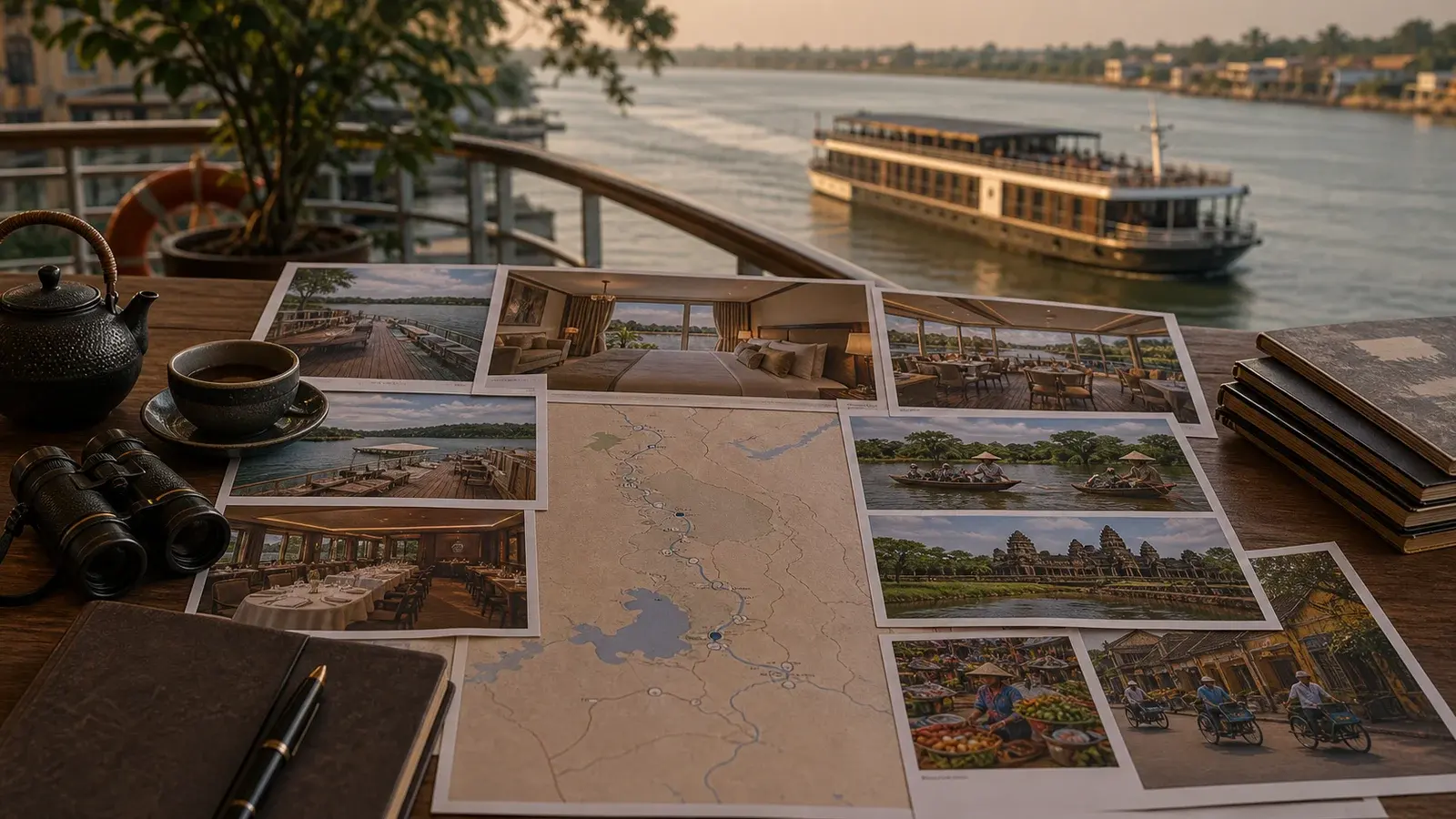
Unpack once, and let the water set the pace of the days.
Viking Mekong: the river as the spine of a trip.
A 14-night Siem Reap-to-Ho Chi Minh City sailing works best as the structural spine of a Cambodia–Vietnam itinerary, not an addition to a wider Asia route. Viking’s 60–80 passenger ships are well-organised and correctly priced; for guests who want yacht-style privacy at roughly three times the cost, the 20-passenger Aqua Mekong is the genuine comparison.
Read the river cruise guideFamily fleet or adult-only line — the second decision.
Once ocean, expedition or river is settled, the passenger mix decides the rest. A 60–80 passenger river ship or a 100-guest expedition vessel reads as adult-paced by default — shared dining, structured excursions, no youth programming. Larger fleet lines built for family groups (multiple dining venues, cabin categories built for three and four) sit at the opposite end of the same ocean-cruise category. VIAIVE does not yet carry a dedicated family-fleet comparison guide; trip request is the right channel to weigh a specific ship against a specific group.
Where this gets decided
Cabin category and age mix on board, confirmed before the line is named.
The category decision comes before the deck plan.
Ocean · Expedition · RiverSuite size, deck position and sea-day pacing are weighed against the itinerary before a specific cabin is held — the same discipline VIAIVE applies to hotel room category.
Every cruise comparison with a full VIAIVE guide.
1 verified write-up — line, ship, and suite category compared directly.
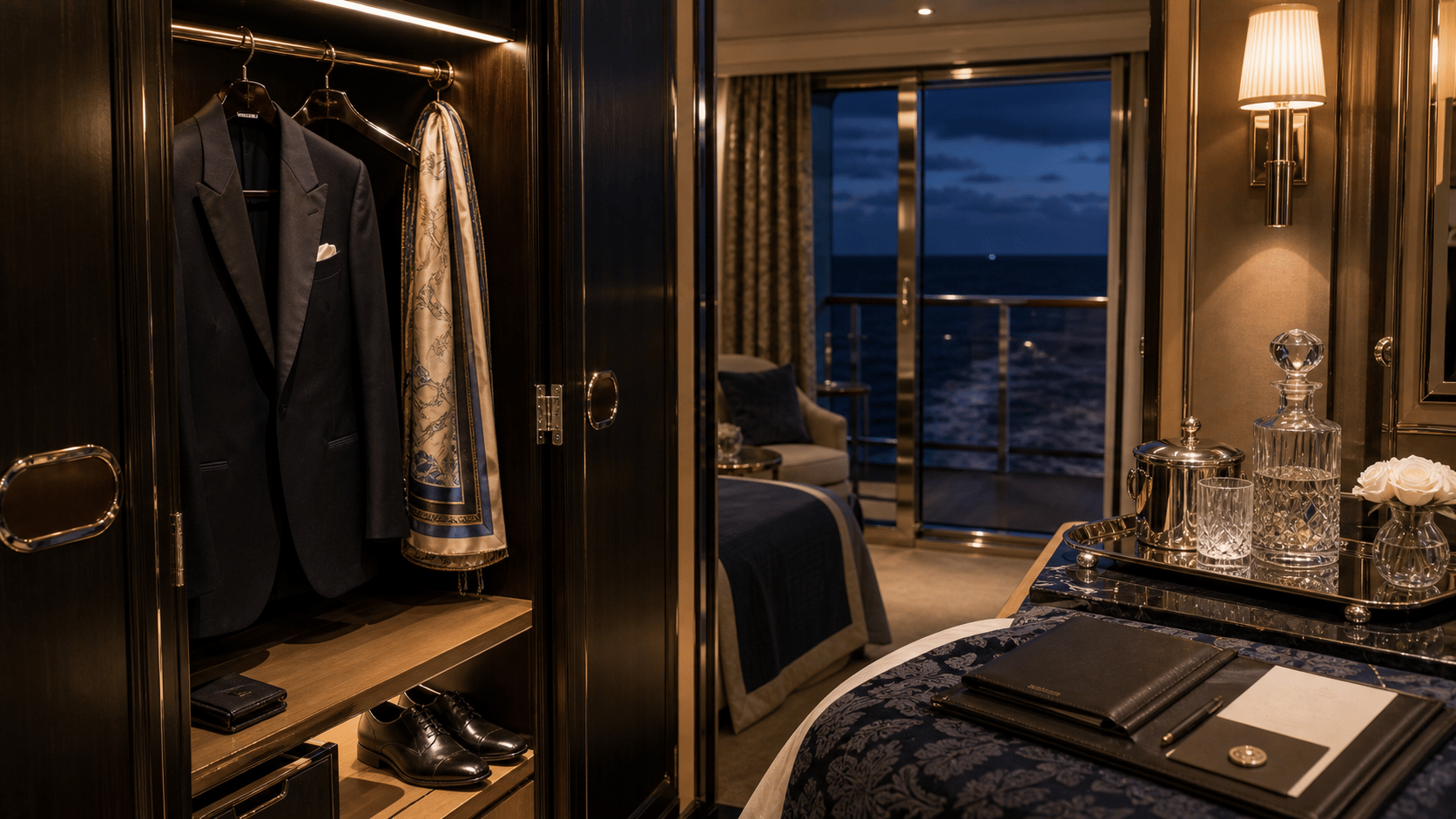
No active cruise line placement yet.
VIAIVE does not currently carry a paid or sponsored cruise-line slot on this page. Live public rate comparison exists for hotels and stays, not for cruise fares, so there is no equivalent module here yet. Cruise and charter selection runs through a trip request instead.
Cruise lines and yacht operators can be considered for a labeled placement the same way hotel and destination partners are — a visible sponsored label, comparable alternatives shown alongside it, and source context on any partner-supplied claim.
Read before the line is named.
Cruises run high-ticket
and high-complexity. Talk to us first.
Send the destination, the group, and what the ship needs to solve. VIAIVE returns a named line, cabin category and season — not a catalogue.
Plan With VIAIVE ↗