Article visual
The guide in one frame.
Four Seasons Resort Chiang Mai is built around an active rice farm in the Mae Rim Valley — guests plant rice, bathe water buffalo, and breakfast in the fields.
Four Seasons Resort Chiang Mai is built around an active rice farm in the Mae Rim Valley — guests plant rice, bathe water buffalo, and breakfast in the fields. Here's why the setting, not the room category, is the real decision.
Paid partner link - VIAIVE may earn compensation at no additional cost to you.
> VIAIVE note: Most valley resorts in Northern Thailand borrow the imagery of a rice farm — a terraced view, a photo backdrop, a name on a spa menu.
Four Seasons Resort Chiang Mai runs an actual one on its own grounds, and lets guests work it. That distinction, more than any single room category, is what should decide whether this property is the right base for a Chiang Mai stay.
> VIAIVE note: Most valley resorts in Northern Thailand borrow the imagery of a rice farm — a terraced view, a photo backdrop, a name on a spa menu.
Rice Before Room Service works best when the specifics above match the trip; when they don’t, use Plan With VIAIVE rather than treating this as a final call.
Paid partner link - VIAIVE may earn compensation at no additional cost to you.
| Decision point | Primary path | Alternative path |
|---|---|---|
| Traveler decision | > VIAIVE note: Most valley resorts in Northern Thailand borrow the imagery of a rice farm — a terraced view, a photo backdrop, a name on a spa menu. | Use correspondence when the itinerary has constraints the public page cannot resolve. |
| Best use case | Introduction | A resort built around a farm, not a theme |
| Commercial path | Use disclosed partner modules when public rate windows matter. | Use VIAIVE correspondence when the placement, room category, or routing needs human judgment. |
Four Seasons Resort Chiang Mai is built around an active rice farm in the Mae Rim Valley — guests plant rice, bathe water buffalo, and breakfast in the fields.
Four Seasons Tented Camp Golden Triangle sells stays as two-, three-, or four-night all-inclusive packages, not nightly rates.
Four Seasons Resort The Nam Hai has no standard hotel rooms — all 100 accommodations are private villas on Ha My Beach, between Hoi An's old town and Da Nang.
Four Seasons Resort Koh Samui has no standard hotel rooms — all 71 keys are hillside pool villas built into a former coconut orchard, with a working Muay Thai ring and an elemental-philosophy spa.
19 July 2026
VIAIVE verifies current reservation status, chef or programme changes, and neighborhood fit before naming a dining decision.
Disclosed Stay22 partner paths appear once near the close of the guide, with sponsored nofollow labeling and affiliate disclosure.
Four Seasons Resort Chiang Mai is built around an active rice farm in the Mae Rim Valley — guests plant rice, bathe water buffalo, and breakfast in the fields. Here's why the setting, not the room category, is the real decision.
> VIAIVE note: Most valley resorts in Northern Thailand borrow the imagery of a rice farm — a terraced view, a photo backdrop, a name on a spa menu. Four Seasons Resort Chiang Mai runs an actual one on its own grounds, and lets guests work it. That distinction, more than any single room category, is what should decide whether this property is the right base for a Chiang Mai stay.
> VIAIVE note: Most valley resorts in Northern Thailand borrow the imagery of a rice farm — a terraced view, a photo backdrop, a name on a spa menu. Four Seasons Resort Chiang Mai runs an actual one on its own grounds, and lets guests work it. That distinction, more than any single room category, is what should decide whether this property is the right base for a Chiang Mai stay.
Thirteen hectares — about 32 acres — is a large footprint for a single property, and Four Seasons Resort Chiang Mai spends most of it on landscape rather than square footage of guest rooms. Two small lakes, lily ponds, waterfalls, and a working rice farm run through the grounds in the Mae Rim Valley, with the Doi Suthep mountain range visible beyond the tree line. The rice isn't ornamental. It's planted, tended, and harvested on a real cycle, and guests are invited into that cycle rather than kept at a scenic distance from it: rice planting with the resort's own farmers, and the more unusual pairing that comes with it — water-buffalo bathing, tied to the traditional working relationship between Northern Thai farmers and their buffalo.
That single fact reframes what the property is selling. A city hotel sells a room and a location. A beach resort sells a shoreline. Four Seasons Resort Chiang Mai, 30 minutes north of both the airport and the Old City, is selling a valley that still functions as a valley — cultivated, seasonal, and slower than the drive in from Chiang Mai would suggest.
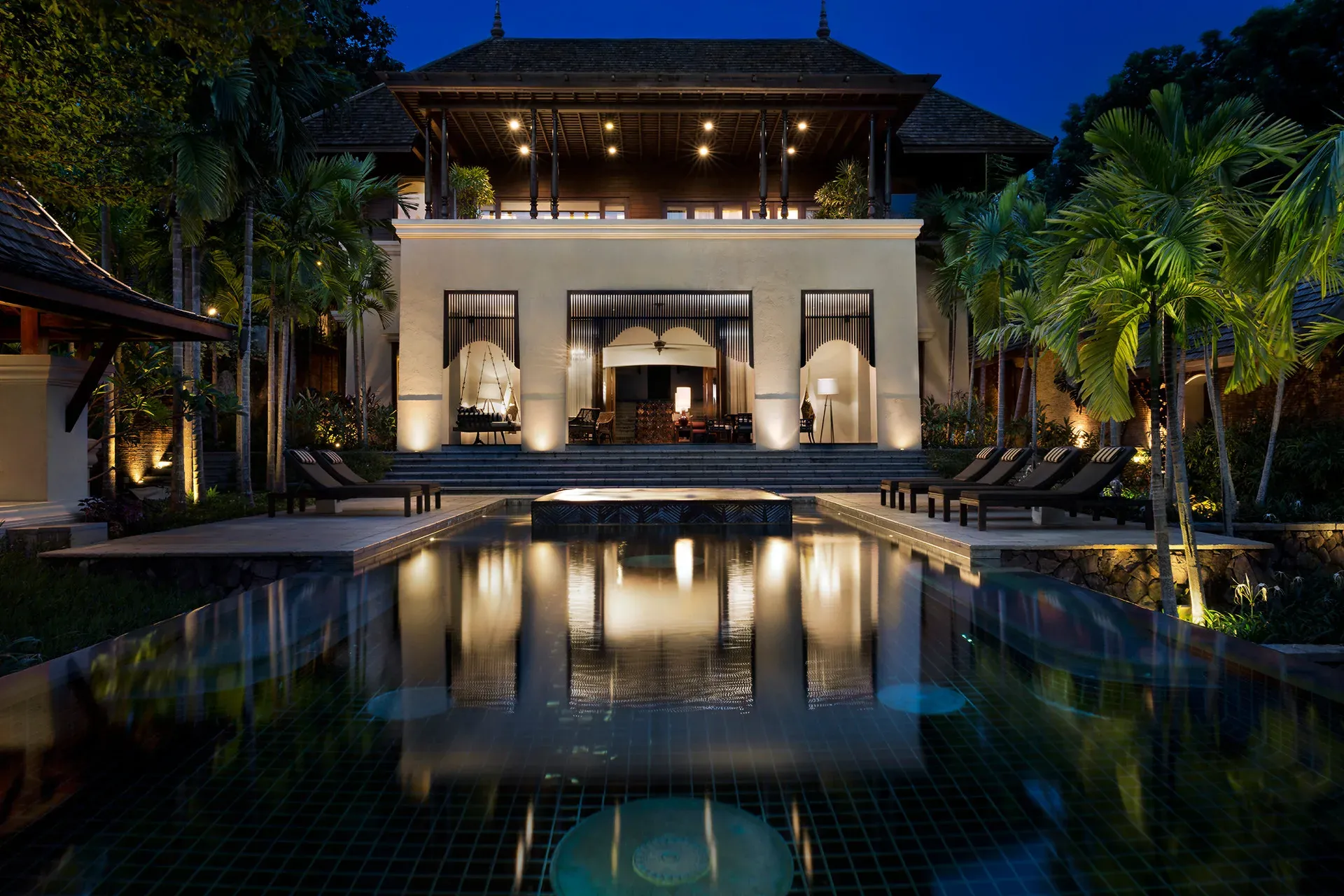
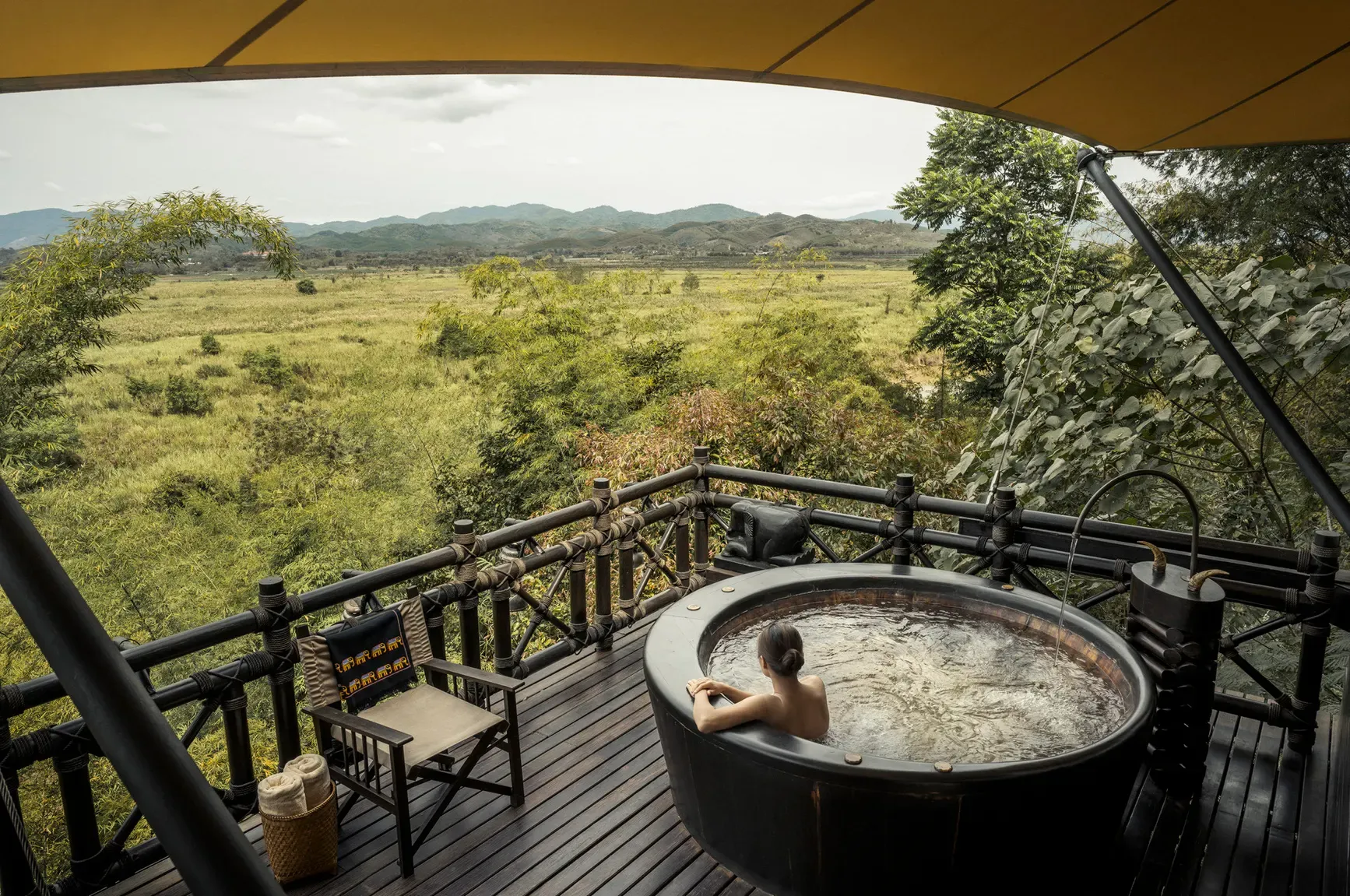
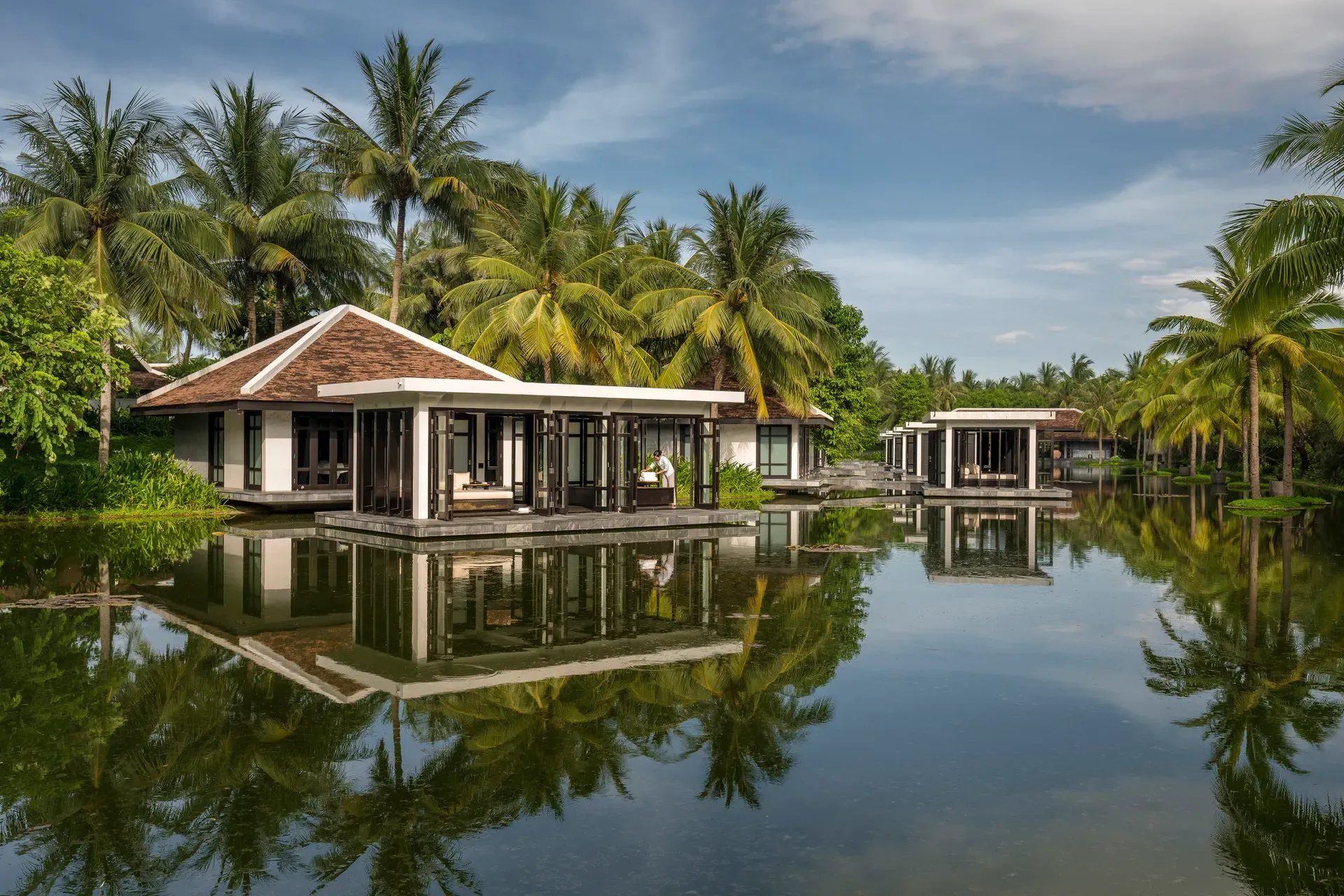
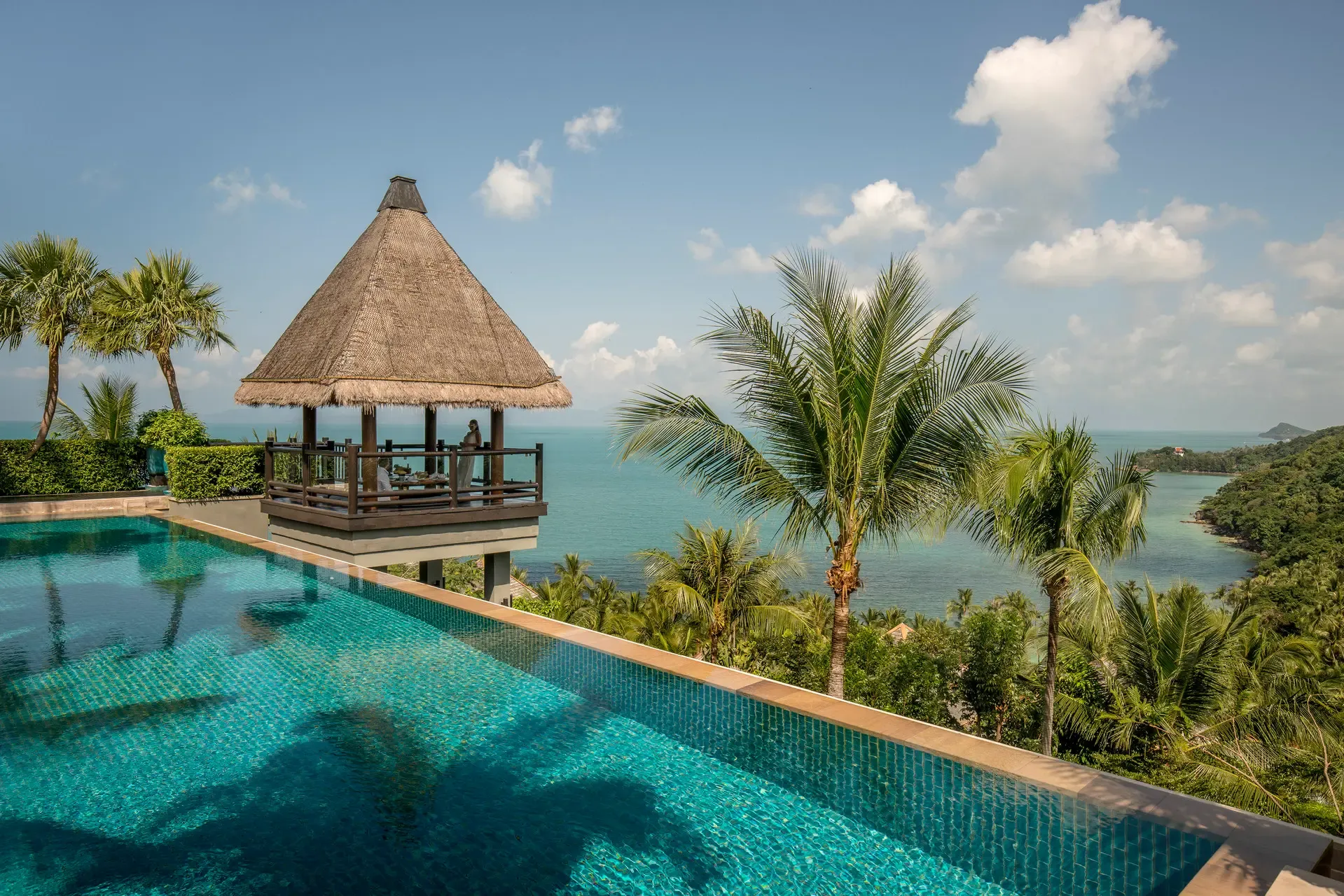
Because the whole property orients around this rice-terrace setting, the real decision for most travelers isn't which hotel to book in Chiang Mai — it's how close to the fields they want to sleep. The resort's three accommodation types answer that question differently rather than simply scaling up in size.
The 64 Pavilions put guests directly among the rice paddies and gardens, each with its own outdoor Thai sala positioned to look out over the terrain; upper-level pavilions add a bit more height and privacy without changing that fundamental proximity to the land. The 12 Pool Villas step back slightly to add a private pool and outdoor shower — a self-contained unit for travelers who want the valley setting but also want a fully enclosed, adults-focused retreat within it. The 22 Private Residences go further still: one- to four-bedroom standalone homes with their own pools, built for families or groups who want a household in the valley rather than a room in a resort, with the option to combine multiple residences into a 20-bedroom configuration for larger parties. None of the three is a compromise version of the others — they're different ways of relating to the same working landscape, and the right choice depends more on party size and how much separation a traveler wants from the rest of the property than on any conventional room-category hierarchy.
The dining program follows the same logic. Rather than treating the rice terrace as backdrop for a single signature restaurant, the resort built specific venues that put guests inside the landscape at different times of day. Rice Barn, a dedicated pavilion overlooking the lake and paddies, hosts the resort's "Breakfast in the Rice Fields" experience — a private, two-to-three-hour morning service set among the working fields rather than in a dining room with a field view. KHAO by Four Seasons takes the more conventional route of a terrace overlooking the rice fields from a fixed dining room, while NORTH by Four Seasons pulls guests toward an open-flame grill built on farm-to-table sourcing. Even Rim Tai Kitchen, the resort's Northern Thai cooking-class venue, is framed as an extension of the same working relationship with the land — guests learn dishes built from what the valley itself produces, inside a Lanna-style teak house that seats up to 104 for its street-food-style dinners.
The throughline across all of it: this is not a resort with one good rice-view photo opportunity. It's a property where the fields shape breakfast, dinner, the cooking classes, and the daytime activity program all at once.
That same rice-farm identity extends into how the resort handles families and longer stays. La-On Kids Club builds its activities directly from the valley setting — rice planting, water-buffalo bathing, tie-dye, and craft workshops drawn from Northern Thai village life rather than a generic hotel kids' menu. Chaan Baan, the resort's arts centre, opens the same programming to adults: pottery, rice planting, and buffalo bathing alongside the children's version, which means a family traveling together can genuinely share the activity rather than splitting into a kids' program and a separate adult itinerary. For multi-generational groups booking one of the larger Private Residences, that shared programming does real work — it gives a household of different ages something to do together that isn't a pool day or a spa morning.
This setting won't suit every Chiang Mai trip. Travelers who want to walk out of a hotel and into the Old City's temple lanes, the Sunday Walking Street, or Nimman's cafe strip will find the 30-minute valley drive a real distance to manage more than once a day, and this is not the property for a trip built around city wandering on foot. It's also a large, multi-format resort — pavilions, villas, and standalone residences spread across 13 hectares — rather than an intimate single-building boutique, so travelers seeking a small-scale stay should look elsewhere.
But for a trip where the valley itself is the destination — where planting rice, bathing a water buffalo, and eating breakfast inside a working field are the point rather than a side activity — Four Seasons Resort Chiang Mai is built for exactly that. The room category becomes a secondary decision once the primary one is settled: not which hotel, but how close to the rice terrace you want to live for a few days.
Four Seasons Tented Camp Golden Triangle sells stays as two-, three-, or four-night all-inclusive packages, not nightly rates. Here's what that structure actually buys, and how to choose a length.
Four Seasons Resort The Nam Hai has no standard hotel rooms — all 100 accommodations are private villas on Ha My Beach, between Hoi An's old town and Da Nang. Here's what that structural choice actually changes about a stay.
Four Seasons Resort Koh Samui has no standard hotel rooms — all 71 keys are hillside pool villas built into a former coconut orchard, with a working Muay Thai ring and an elemental-philosophy spa. Here's what that structure actually changes.
Field Intelligence Letter
A short monthly note on hotel openings, route shifts, seasonal timing, and the stay decisions worth making early.
One letter per month. Unsubscribe at any time. No sharing, no resale. Privacy Policy.
When a piece here makes you want to move, write the first few lines.
Plan With VIAIVE ↗