Skip to content
SearchSavedPlan a trip

Raya Heritage builds its case on process rather than spectacle — a 38-suite property whose terracotta tiles, hand-carved teak, and hand-dyed textiles came out of a two-year working relationship with weavers, potters, and woodcarvers across northern Thailand, set on the Ping River just outside central Chiang Mai. Best for: Travelers who want a small, craft-forward property on the Ping River with a garden-level private pool available and easy access to Mae Rim's countryside. Raya Heritage sits on the Ping River in Chiang Mai's Mae Rim district, its 38 suites built from two years of work with local weavers, potters, and woodcarvers. Here's who it fits.

01 · Chiang Mai, Thailand · Hotel

Raya Heritage

Raya Heritage sits on the Ping River in Chiang Mai's Mae Rim district, its 38 suites built from two years of work with local weavers, potters, and woodcarvers. Here's who it fits.

The short answer

Raya Heritage builds its case on process rather than spectacle — a 38-suite property whose terracotta tiles, hand-carved teak, and hand-dyed textiles came out of a two-year working relationship with weavers, potters, and woodcarvers across northern Thailand, set on the Ping River just outside central Chiang Mai.

Two ways to check the room: the property’s own listing, or a live rate search across more room categories and dates.

Paid partner link - VIAIVE may earn a commission at no additional cost to you.

Email
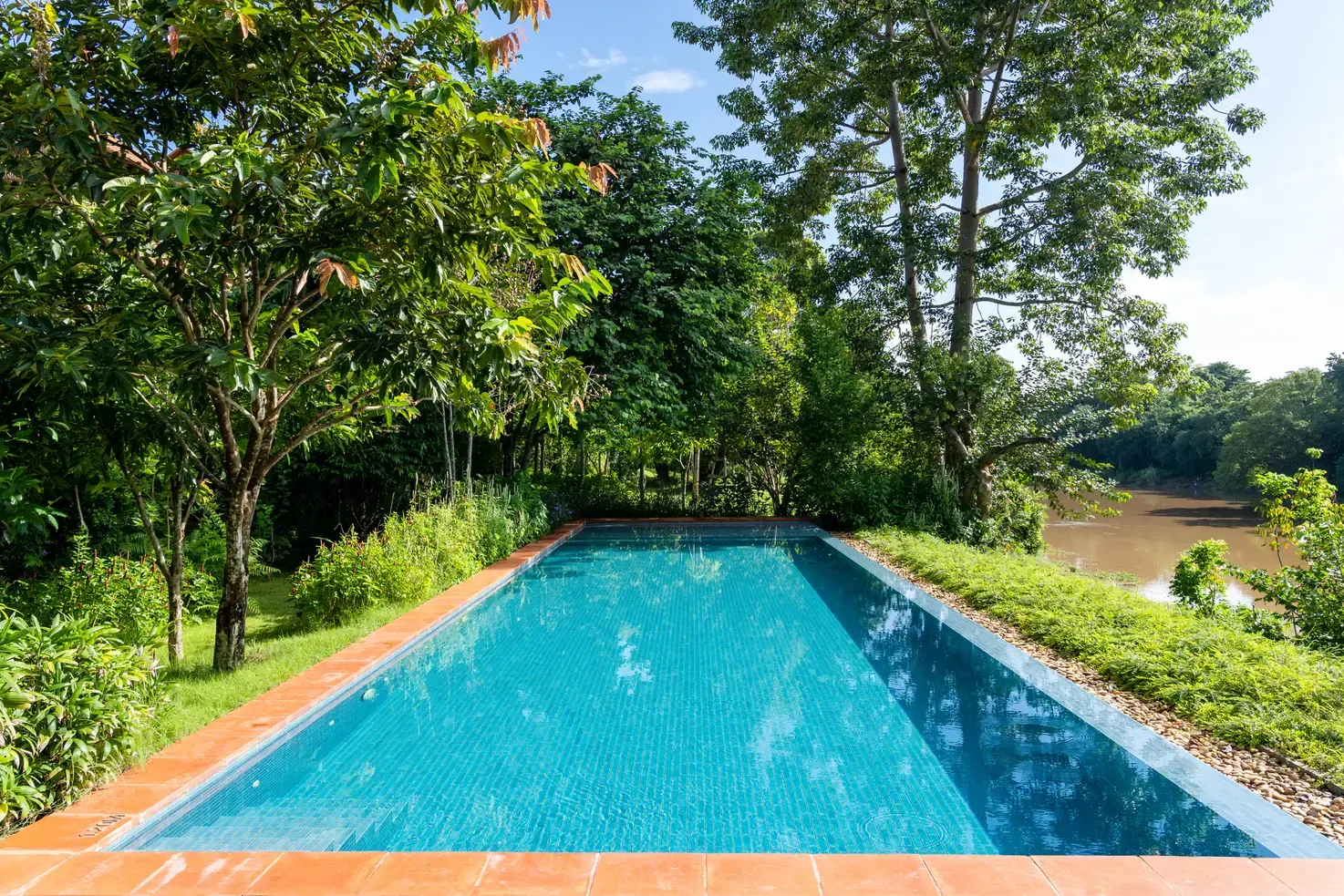
Infinity pool overlooking the Ping River valley at Raya Heritage Chiang Mai
Press image courtesy of Raya Heritage
Best fit
Travelers who want a small, craft-forward property on the Ping River with a garden-level private pool available and easy access to Mae Rim's countryside.
Trade-off
Travelers who want to walk to Chiang Mai's Old City temples and night markets, or who are traveling with children under 6.
Location
Chiang Mai, Thailand
Last verified
July 19, 2026

A fast shortlist decision.

The trade-off stays visible before the longer evidence read.

Best for

Travelers who want a small, craft-forward property on the Ping River with a garden-level private pool available and easy access to Mae Rim's countryside.

Avoid if

Travelers who want to walk to Chiang Mai's Old City temples and night markets, or who are traveling with children under 6.

The property

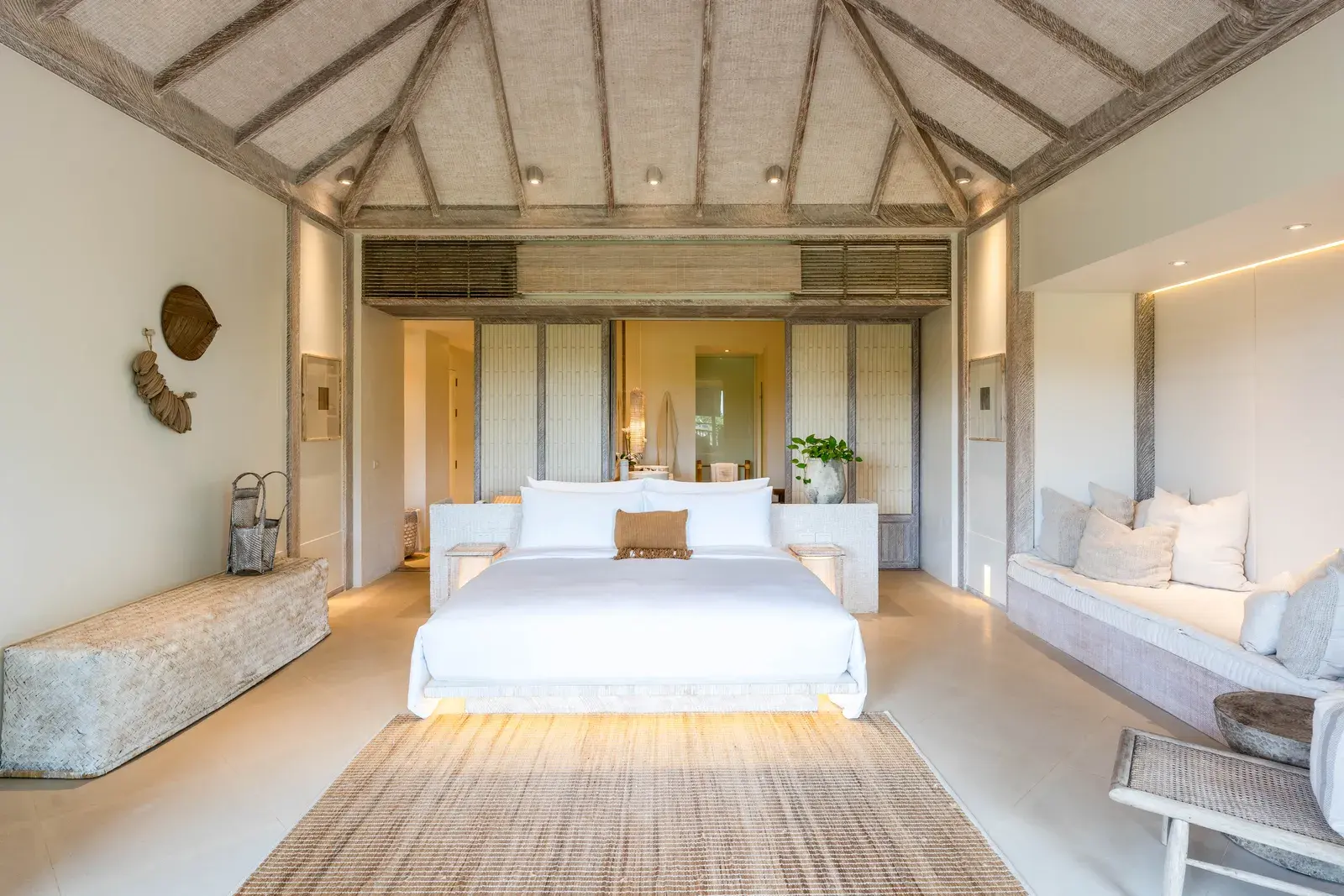
Suite bedroom at Raya Heritage Chiang Mai
Press image courtesy of Raya Heritage

Suites open onto generous outdoor verandas facing the river, referencing the front-porch gathering spaces of older Thai village houses, with high ceilings and a white-and-cream interior palette giving what the hotel calls a light contemporary twist against the traditional materials outside.

Before opening, its design team spent two years working directly with local artisans (weavers, potters, woodcarvers) in villages around northern Thailand, and that work fills the property: hand-carved teak-frame mirrors, locally made ceramic tiles, handwoven and hand-dyed textiles, and handmade lacquerware. The textiles come from village weaving cooperatives using natural dyes, including indigo from the local Indigofera tinctoria plant.

Dining and bars

Khu Khao restaurant at Raya Heritage Chiang Mai
Press image courtesy of Raya Heritage

- Khu Khao: the hotel's signature restaurant, open 07:00–23:00, built around cuisine inspired by the rice-based culture of northern Thailand. A November 2025 menu update added four categories, including Crossroad Cuisine (dishes drawn from historic overland trade routes) and Childhood Heritage, built from staff-submitted family recipes. - Baan Ta Lounge & Lawn: riverside cocktails and food service, open 11:30–23:00. - Laan Cha Tea Terrace: an outdoor terrace over the Ping River serving afternoon tea, 11:30–17:00.

Wellness, pool, and shopping

Spa-style bathroom with dual vessel sinks at Raya Heritage Chiang Mai
Press image courtesy of Raya Heritage

Ai Waan Spa (10:00–22:00) focuses on regional healing techniques in private treatment rooms, including a signature Bamboo Massage using lightly heated bamboo sections. A fitness room (06:00–21:00) has free weights and cardio equipment, and the swimming pool (8 by 20 meters, 1.2 meters deep, parallel to the river) is open 07:00–19:00. Him Gong: Curated Craft, the on-site shop, sells artisan-made pieces (08:00–18:00).

Location and excursions

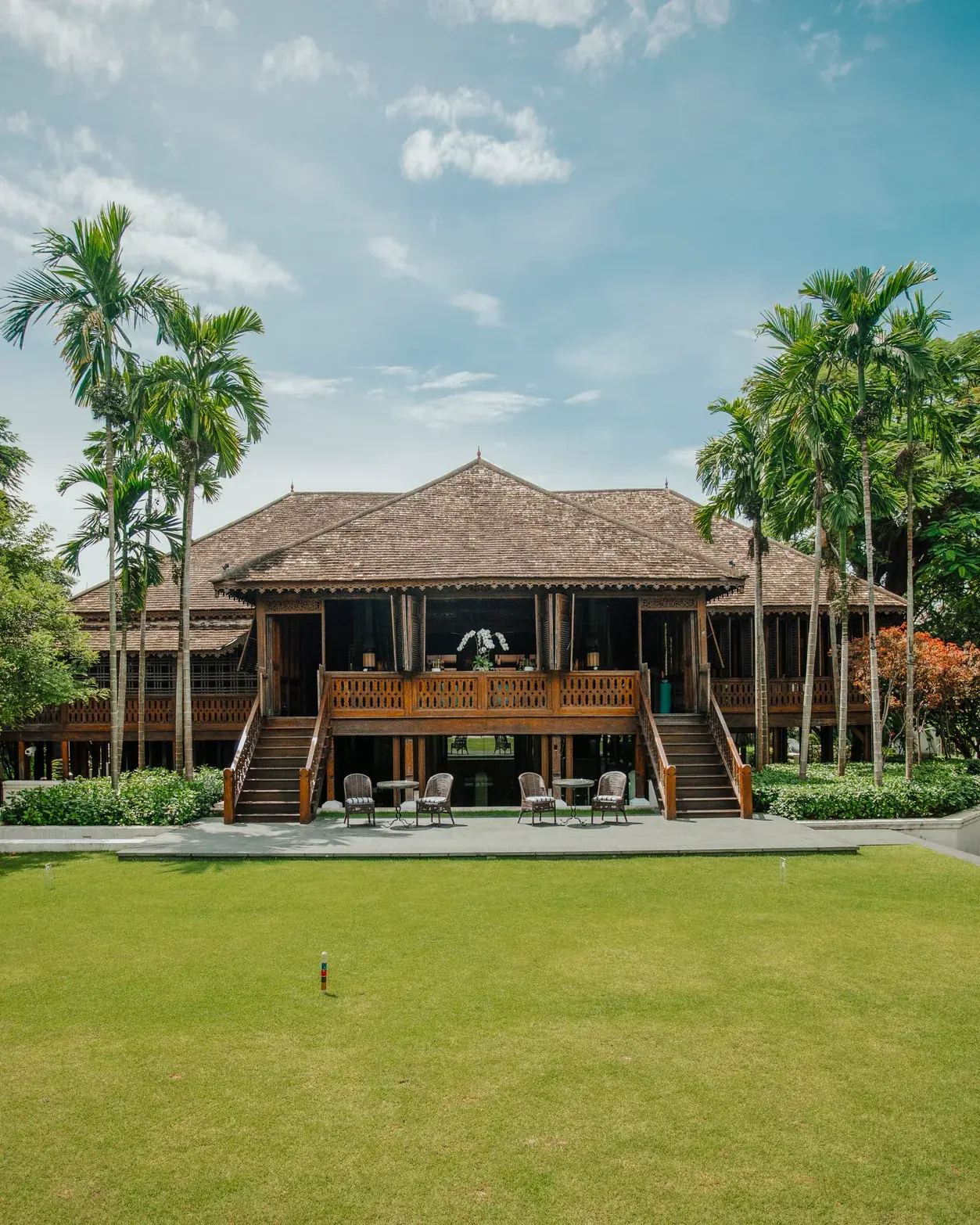
Traditional Lanna-style house exterior at Raya Heritage Chiang Mai
Press image courtesy of Raya Heritage

The address is 157 Moo 6, Tambol Donkaew, Amphoe Mae Rim, Chiang Mai 50180, roughly 30 minutes from the airport and about 20 minutes from the historic city center. Raya Heritage arranges half- and full-day excursions framed around an eco-travel approach: temples, markets, village trips, national park outings, artisan studio visits, and activities such as elephant experiences, jungle walks, rock climbing, and rafting.

Raya Heritage holds Travelife Gold certification and is affiliated with the Leading Hotels of the World and Tablet Hotels networks.

Dining

Overview: Ai Waan Spa (10-22:00) features a signature Bamboo Massage. Him Gong: Curated Craft boutique (8-18:00) sells handcrafted goods, the clearest expression of the property's artisan-craft positioning. Khu Khao was closed for renovation June-July 2025; reconfirm current status.

Booking this: VIAIVE's full Raya Heritage review covers the property overall and links to a live booking page, so read it before settling on a specific venue. To verify availability for your dates, or to ask an advisor which venue suits your stay, use VIAIVE's advisory correspondence instead of booking blind.

Rooms & categories

Overview: 38 suites total. 13 Rin Terrace (2nd floor, white/cream/black), 14 Huen Bon (3rd floor, teakwood mirror bathrooms), 11 Kraam Pool (garden, private pool, hand-woven indigo fabric). Shared material language: handwoven textiles, baskets, pottery, woodcarvings from northern Thai craft traditions. Bed config not published for any category. Direct-booking terms: 2-night min, THB 500 daily resort credit, complimentary airport transfers.

Booking this: Read VIAIVE's full Raya Heritage review before you choose a specific category. It covers the property overall and links to a live booking page. To verify availability for your dates or ask an advisor which category is the right choice for your stay, use VIAIVE's advisory correspondence rather than booking blind.

Artisan craft on the Ping River

Introduction: > VIAIVE note: Most hotels describe their furniture as "locally inspired" and leave it there. Raya Heritage's own account of its build-out is more specific: two years of direct work with weavers, potters, and woodcarvers in villages across northern Thailand, before a single guest ever checked in. That timeline, and what it actually produced, is worth looking at on its own terms.

A resort built backward from the craft, not the other way around: Most hotel design stories run the same direction: an architect sets the concept, a procurement team sources finishes to match, and "local" ends up meaning a handful of accent pieces scattered through an otherwise generic build. Raya Heritage's own account of its own construction runs closer to the opposite order. According to the property, its design team spent two years working directly with local weavers, potters, woodcarvers, and other artisans in small towns and village communities around the north of Thailand, prior to the resort's opening, and that work forms the core of the 38-suite property rather than a supplementary layer of decor.

The distinction matters because it changes what a guest is actually looking at in the room. A hand-carved teak-frame mirror or a piece of handmade lacquerware sourced this way is, by the hotel's own description, "sourced from and often created by local craftspeople using traditional techniques," a claim that sets it apart from a factory reproduction of a traditional motif. The ceramic tiles used throughout the property carry the same description: pieces locally crafted by hand, following traditional techniques. Whether a guest can tell the difference at a glance is a fair question. What is verifiable is the process the hotel says produced the objects, and the two-year timeline attached to it.

The textiles, traced to source: The clearest illustration is the fabric. Raya Heritage's suites use handwoven, hand-dyed textiles produced by weaving cooperatives in northern Thai villages, using what the hotel describes as age-old methods of spinning and weaving. That phrase means the yarn preparation and loom work follow techniques that predate industrial textile production in the region, distinct from a modern reproduction of a traditional pattern. The dyes are stated to be exclusively natural, including authentic indigo drawn from the local Indigofera tinctoria plant, the same source behind the indigo-dyed cotton long associated with northern Thai weaving traditions.

That level of specificity, a named plant species, a named production method, a named craft category (weaving, potting, woodcarving), is unusual for a hotel's own marketing copy, which more often gestures at "artisanal" without saying what was actually made or by whom. It doesn't make the claim independently verified, but it does make it a concrete, checkable one: a guest can ask, on property, to see where a specific textile or ceramic piece came from, in a way that "locally inspired decor" never invites.

Architecture built to hold the craft, not compete with it: The building itself is designed to stay out of the way of that material story. The hotel describes its three low-rise structures as using terracotta tiles, hipped roof gables, vintage hardwood columns and beams, and mulberry-paper screens: a set of materials chosen specifically to evoke traditional northern Thai design, not reinterpret it in a contemporary material palette. Inside, the approach shifts: high ceilings and a white-and-cream color scheme give what the hotel calls a light contemporary twist, a deliberate contrast that keeps the crafted objects (the mirrors, the textiles, the lacquerware) as the visual focus without competing with a busier architectural backdrop.

The suite layout reinforces the same idea. Each of the three suite categories (the 75 sq m Rin Terrace Suite, the 75 sq m Huen Bon Suite reached by a private staircase to the third floor, and the 100 sq m Kraam Pool Suite with its private plunge pool) opens onto a generous outdoor veranda facing the Ping River. The hotel frames this as a reference to a specific, older domestic habit: villagers gathering on their front porches in the evening. It's a small detail, but it ties the architecture back to the same regional-life premise as the craft program, not a separable luxury amenity bolted onto the room.

The river as working context, not backdrop: The Ping River itself is not incidental to any of this. Raya Heritage sits in Mae Rim, on the northern edge of Chiang Mai province, a working agricultural and craft region rather than the tourist-dense Old City core roughly 20 minutes away. That geography is part of what makes the two-year artisan-sourcing story plausible at the scale described: villages producing textiles, ceramics, and woodwork at a level worth building a 38-suite hotel around are a realistic proposition in the countryside surrounding Chiang Mai in a way they would not be inside a dense historic center already built out for tourism.

The hotel's own excursion program extends the same logic outward. Alongside temple and market visits, Raya Heritage arranges half- and full-day trips to artisan studios in the surrounding region, a direct continuation, for guests who want it, of the same sourcing relationships that furnished their suite. Paired with the on-site shop, Him Gong: Curated Craft, which sells artisan-made pieces directly, the property positions itself less as a hotel that happens to have nice furniture and more as a fixed point inside an active regional craft economy, one a guest can step into during a stay, not simply observe through a hallway display case.

None of this replaces a firsthand look at the specific pieces in a specific suite, and the hotel's own copy is the primary source for the craft-timeline claims here: there's no independent audit of the two-year process to point to. But the specificity of what's described (named techniques, a named dye source, named craft categories tied to a stated multi-year process) gives a prospective guest more to evaluate than the industry-standard "handcrafted, locally inspired" line usually offers.

Location & arrival

Chiang Mai, Thailand

Supported highlights

Weighed the Ping River, Mae Rim-district setting, the 38-suite scale built from a two-year collaboration with local weavers, potters, and woodcarvers, and garden-level private-pool availability against Chiang Mai's Old-City hotel cluster.
What this guide is based on

5 property photographs are published with source and rights notes.

Guide updated July 19, 2026.

Continue comparing

Continue the trip