Article visual
The guide in one frame.
At Six Senses Samui, a working farm on the resort grounds — chickens, goats, a greywater catchment system, and a community market — supplies the kitchens and anchors the property's clifftop setting.
At Six Senses Samui, a working farm on the resort grounds — chickens, goats, a greywater catchment system, and a community market — supplies the kitchens and anchors the property's clifftop setting. Here's how it actually functions.
Paid partner link - VIAIVE may earn compensation at no additional cost to you.
Most resort sustainability pages read the same way: a paragraph on solar panels, a line about reducing single-use plastic, a stock photo of a herb garden nobody in the kitchen has ever touched.
Six Senses Samui's version is different mostly because it's load-bearing — the property's working farm exists because the resort had a landscaping and waste problem to solve, and the solution turned into a functioning smallholding that still feeds the kitchens today.
Most resort sustainability pages read the same way: a paragraph on solar panels, a line about reducing single-use plastic, a stock photo of a herb garden nobody in the kitchen has ever touched.
The Farm Behind the Villas works best when the specifics above match the trip; when they don’t, use Plan With VIAIVE rather than treating this as a final call.
Paid partner link - VIAIVE may earn compensation at no additional cost to you.
| Decision point | Primary path | Alternative path |
|---|---|---|
| Traveler decision | Most resort sustainability pages read the same way: a paragraph on solar panels, a line about reducing single-use plastic, a stock photo of a herb garden nobody in the kitchen has ever touched. | Use correspondence when the itinerary has constraints the public page cannot resolve. |
| Best use case | Introduction | A farm built to solve a problem, not to look good |
| Commercial path | Use disclosed partner modules when public rate windows matter. | Use VIAIVE correspondence when the placement, room category, or routing needs human judgment. |
At Six Senses Samui, a working farm on the resort grounds — chickens, goats, a greywater catchment system, and a community market — supplies the kitchens and anchors the property's clifftop setting.
Every villa at Six Senses Yao Noi sits on stilts above the tree line on a private island in Phang Nga Bay, reachable only by speedboat — and the resort's two flagship dining rooms, Nithan and The Hilltop, split the same
A VIAIVE planning visual used to support comparison, routing, and stay decisions.
A VIAIVE planning visual used to support comparison, routing, and stay decisions.
19 July 2026
VIAIVE verifies current reservation status, chef or programme changes, and neighborhood fit before naming a dining decision.
Disclosed Stay22 partner paths appear once near the close of the guide, with sponsored nofollow labeling and affiliate disclosure.
At Six Senses Samui, a working farm on the resort grounds — chickens, goats, a greywater catchment system, and a community market — supplies the kitchens and anchors the property's clifftop setting. Here's how it actually functions.
Most resort sustainability pages read the same way: a paragraph on solar panels, a line about reducing single-use plastic, a stock photo of a herb garden nobody in the kitchen has ever touched. Six Senses Samui's version is different mostly because it's load-bearing — the property's working farm exists because the resort had a landscaping and waste problem to solve, and the solution turned into a functioning smallholding that still feeds the kitchens today.
Most resort sustainability pages read the same way: a paragraph on solar panels, a line about reducing single-use plastic, a stock photo of a herb garden nobody in the kitchen has ever touched. Six Senses Samui's version is different mostly because it's load-bearing — the property's working farm exists because the resort had a landscaping and waste problem to solve, and the solution turned into a functioning smallholding that still feeds the kitchens today.
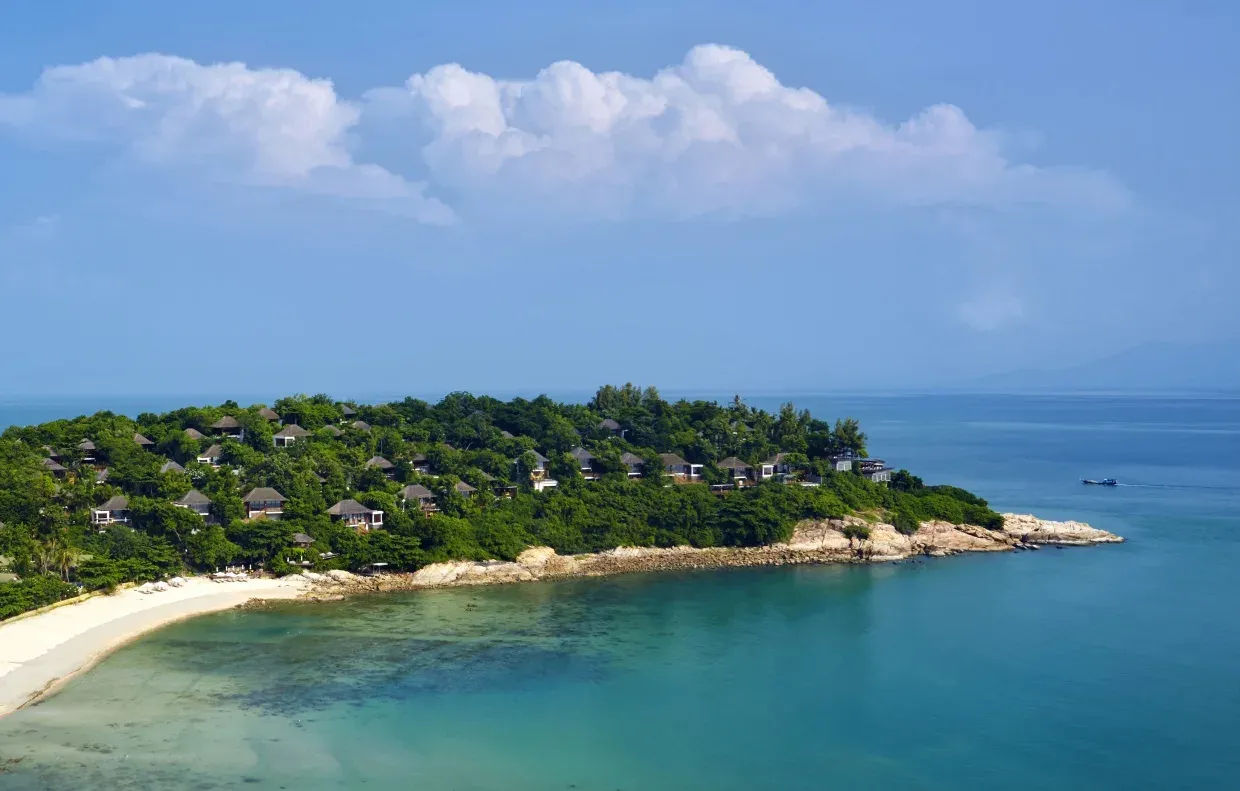
Farm on the Hill sits on the resort grounds on Koh Samui's northern headland, and its origin story is unusually practical for a luxury property. The resort was generating a large volume of organic waste, had unused greywater with nowhere useful to go, and had land that lacked nutrient-rich soil for planting. Rather than trucking the waste off-site, the resort built a farm around the problem: a greywater catchment system feeds the growing beds, chickens and goats convert food scraps and land maintenance into eggs and milk, and the resulting compost rebuilds the soil the farm then plants into. The farm today produces organic eggs, goat milk, and fresh vegetables that go directly into the resort's kitchens — including Dining on the Rocks, the cliffside restaurant perched on the headland's tip with 270-degree views of the Gulf of Thailand, and Dining on the Hill, the resort's main all-day restaurant.
It's a small operation by working-farm standards, but it does real things: it absorbs waste the resort would otherwise have to ship out, it uses water the resort would otherwise discharge, and it puts fresh, traceable ingredients into the kitchen instead of importing everything by boat and truck from the mainland.
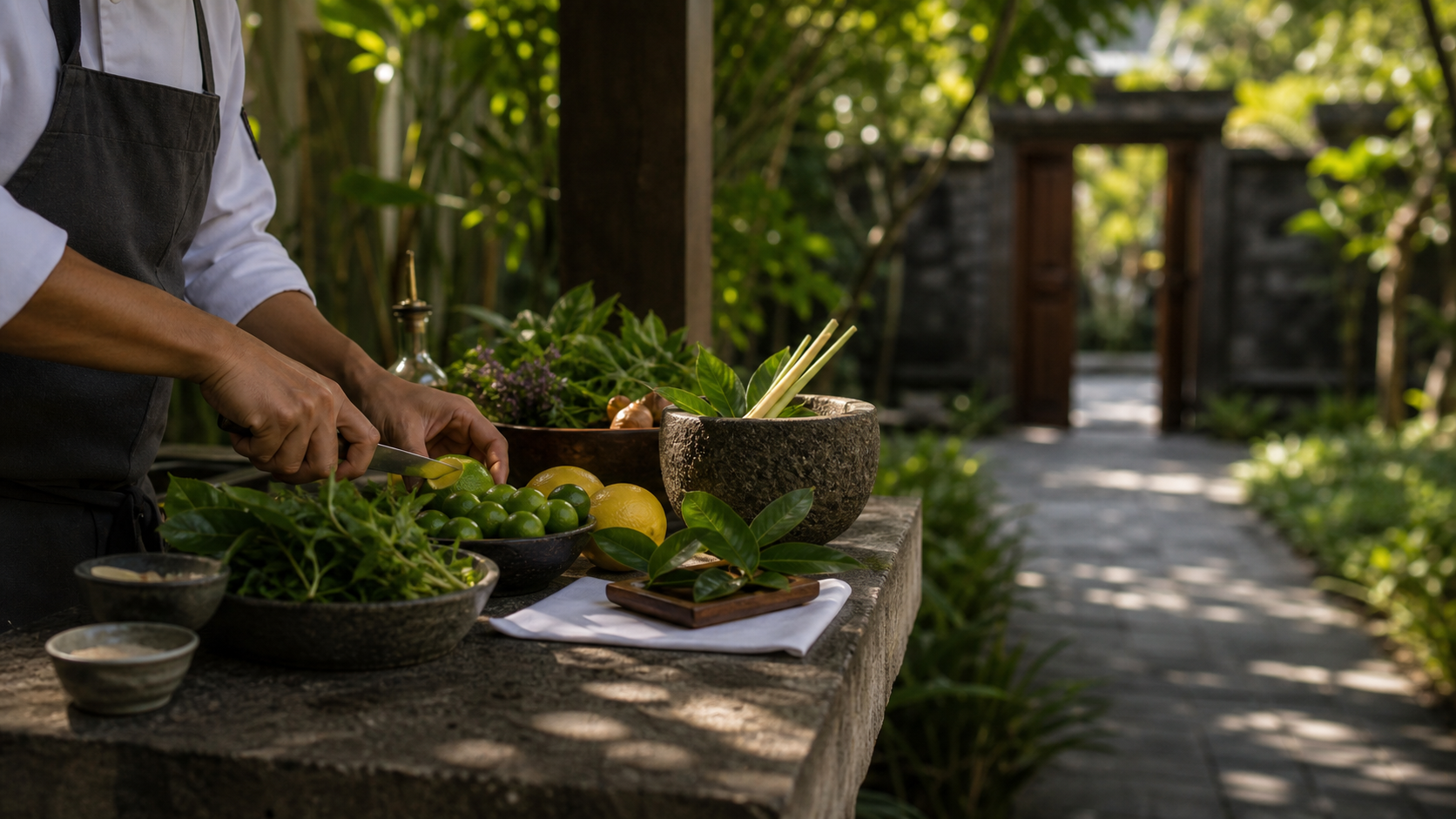
What separates Farm on the Hill from a guest-only amenity is who else gets to use it. Local schools and industry professionals are welcomed onto the farm to see waste reduction, circularity, and natural pest-management practices in action — the resort treats it as a teaching site, not a private perk. The farm also supplies a community market held on the property, which sells the farm's own organic produce, herbs, and dairy alongside charcoal made from recycled wood and meals prepared by local chefs. Ten percent of everything the market earns is donated directly to local community initiatives, which turns a resort amenity into a recurring, small-scale funding source for the surrounding area rather than a one-off donation.
For guests, the farm doubles as an activity rather than a backdrop. Feeding the goats, picking produce, and touring the grounds at sunset before a Thai barbecue are all guest-facing options, and the same farm anchors the resort's Junior Journeys children's program — kids meet the resident goat family, craft drinking straws from lemongrass, fold coconut-leaf origami, try their hand at rock painting and Thai dance, and spend time gardening on the farm itself. It's a version of a kids' club built from what the property actually has on-site, rather than an imported activity list.
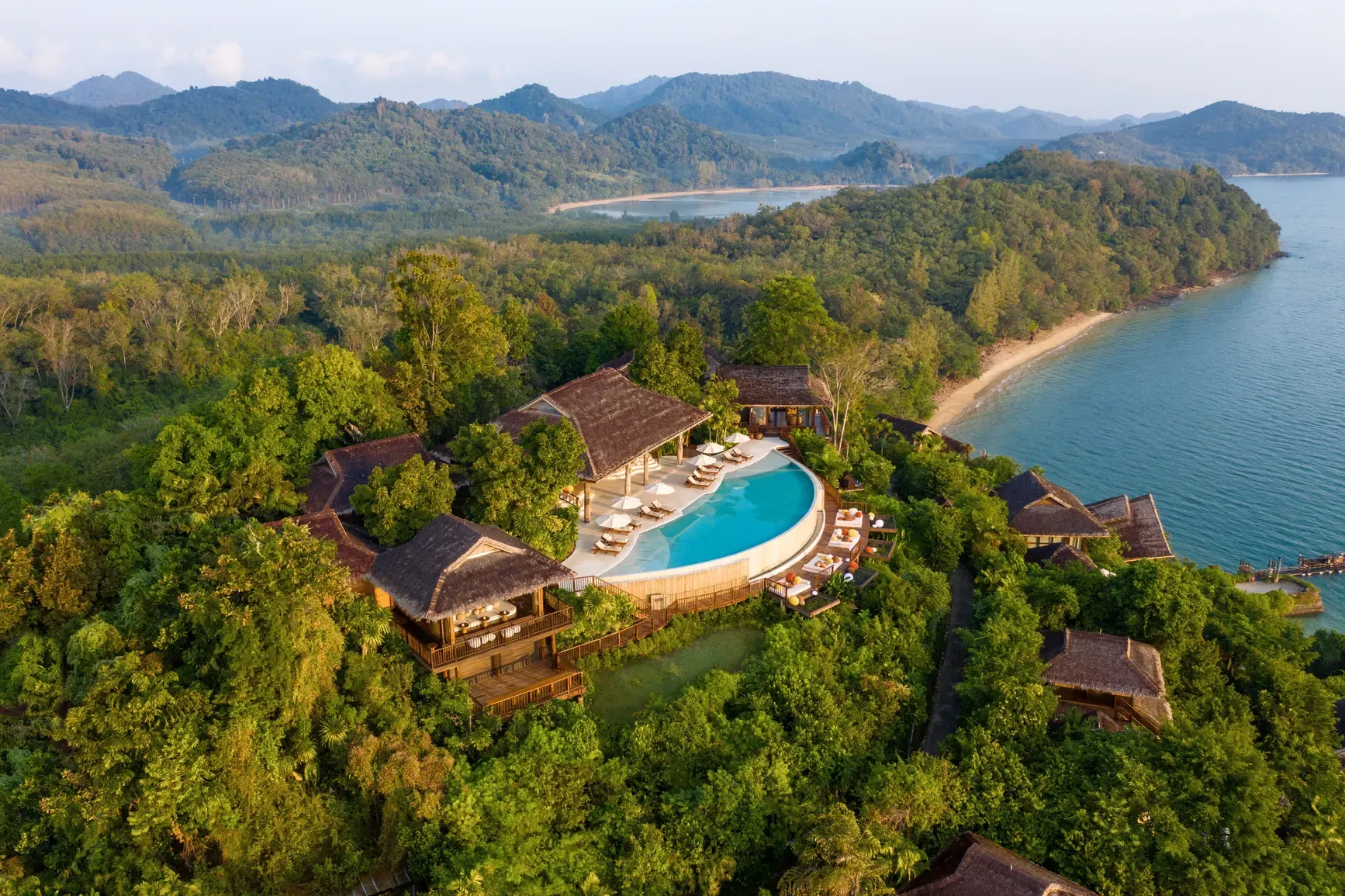
The farm isn't an isolated feature — it's consistent with how the rest of Six Senses Samui is built. The resort occupies a raised, jungle-covered headland at Koh Samui's northern tip, and the majority of its 66 villas are set into the hillside with private infinity-edge pools built in as standard rather than an upgrade. That same instinct — build the property to work with the land it sits on, rather than flattening it into a generic beachfront strip — is what put a working farm on a luxury hillside in the first place instead of a beachfront pool bar.
The certification side backs this up at the brand level: as of December 2024, Six Senses properties, including Samui, are GSTC Certified through third-party audits conducted by Control Union — an outside verification of the operational practices Farm on the Hill and the resort's broader waste and water systems are built around, rather than a self-reported claim.
None of this changes what a guest actually does with their days at Six Senses Samui — the clifftop views, the private pool villas, and the cliffside dining room are still the reasons most people book. What the farm changes is what's underneath the stay: the eggs at breakfast, the vegetables on the Dining on the Rocks menu, and the goat's milk in a spa treatment are more likely to have come from a few hundred metres up the hill than from a supply boat. For travelers who care where a resort's sustainability claims actually originate, Farm on the Hill is a rare case where the answer is a specific, walkable place on the property rather than a policy document.
It's also a useful lens for comparing resorts on the island more broadly. A private pool and a Gulf view are available at several clifftop properties on Koh Samui's northern coast; a working farm that supplies the kitchen, teaches local schools, and funds community initiatives through its own market is a harder thing to replicate, and it's the detail worth asking about at any resort that markets itself as sustainable.
Every villa at Six Senses Yao Noi sits on stilts above the tree line on a private island in Phang Nga Bay, reachable only by speedboat — and the resort's two flagship dining rooms, Nithan and The Hilltop, split the same limestone-karst setting between garden level and hilltop.
Dining at Six Senses Yao Noi: Nithan (Southern Thai), The Hilltop (progressive Western, bay-view), The Living Room (all-day), The Den (bar), plus in-villa dining.
Six Senses Yao Noi villa categories at Phang Nga Bay: sizes from 154 to 500 sq m, one to four bedrooms, private pools throughout.
Field Intelligence Letter
A short monthly note on hotel openings, route shifts, seasonal timing, and the stay decisions worth making early.
One letter per month. Unsubscribe at any time. No sharing, no resale. Privacy Policy.
When a piece here makes you want to move, write the first few lines.
Plan With VIAIVE ↗