Japan rewards deliberate routing. How to build a Japan itinerary that moves without becoming a logistics exercise.
Japan rewards route discipline: fewer bases, better hotel categories, and private guide days outperform constant movement.
The most common Japan routing mistake
Japan's density of compelling destinations, combined with the Shinkansen's illusion of proximity, produces itineraries that attempt to be encyclopaedic. Tokyo, Nikko, Kamakura, Hakone, Kyoto, Nara, Osaka, Hiroshima, and a ryokan night in ten days: it is possible, technically. Each location gets a half-day. Every morning is a pack-out. No property has time to settle around you. The check-in overhead (pack, transfer, check in, orient, settle) costs three to four hours of effective trip time per hotel change. A ten-day itinerary with seven properties loses two full days to logistics. The itineraries we build work from a different premise: three to five locations maximum, each location with a minimum of two nights, and the routing sequence designed so each transit has a reason beyond geography. Depth at fewer stops consistently produces a more memorable Japan than breadth across many.
The three routing models that work
Linear south-to-north: fly into Osaka Kansai, begin in Kyoto, move to Tokyo and exit from Narita or Haneda. This eliminates backtracking, so the routing feels coherent from start to finish. Hub-and-spoke from Tokyo: base yourself at Aman Tokyo or Four Seasons Otemachi for four to five nights and make day excursions to Nikko (UNESCO shrines, two hours each way), Kamakura (Daibutsu and the coastal temples), and Hakone (Fuji views from Gora Park). No hotel changes, no pack-outs, and Tokyo functions as a serious destination rather than a one-night landing. Specialist route for repeat visitors: the Setouchi Inland Sea (Naoshima art island, the Benesse Art Site), Tohoku in autumn, or Kyushu with onsen towns like Yufuin and Beppu. These routes require more planning and a guide relationship, but they deliver a Japan that most first-time itineraries never reach.
Photographs for this guide.
Using transit as an asset, not dead time
The Sunrise Izumo overnight train departs Tokyo at 22:00 and arrives in Matsue, on the San'in coast, the following morning. A private compartment on this train, the last overnight express in regular service in Japan, is itself a significant experience, and it delivers you to a part of Japan that most international itineraries skip entirely: Izumo Taisha shrine, the Adachi Museum of Art, and the San'in coastline. For guests based in Hakone, a helicopter transfer to central Tokyo takes approximately 35 minutes, eliminates a highway transfer on a congested morning, and delivers an arrival over the city that no Shinkansen can replicate. On clear days, the Tokaido Shinkansen window seat on the right side of the train heading north, looking west, frames Mount Fuji for approximately 20 minutes between Shin-Fuji and Odawara. It is a small thing, but it is the kind of deliberate detail that separates a well-built itinerary from a logistics sheet.
Private access moments worth anchoring the routing around
Kinkakuji before public opening: through an introduction-based arrangement, it is possible to enter the Golden Pavilion grounds before the gates open to general visitors, with no crowd, early light, and the reflection lake to yourself. This is the version of Kinkakuji that photographs represent but that almost no visitor experiences. A private tea ceremony in a Kyoto machiya (traditional townhouse) is arranged through a cultural liaison who works with a small number of advisory networks: not the hotel tearoom, but a practitioner's working space in a residential neighbourhood of Higashiyama. Pre-arranged access to a Noh performance in a private setting through a specific Kyoto cultural liaison whose calendar is limited and whose relationships take time to establish. Kaiseki dinner at Kikunoi Honten includes a pre-arranged dashi demonstration in the kitchen before the meal begins. An hour with the head chef in the prep kitchen changes how you experience the eight courses that follow.
The check-in overhead rule and when to break it
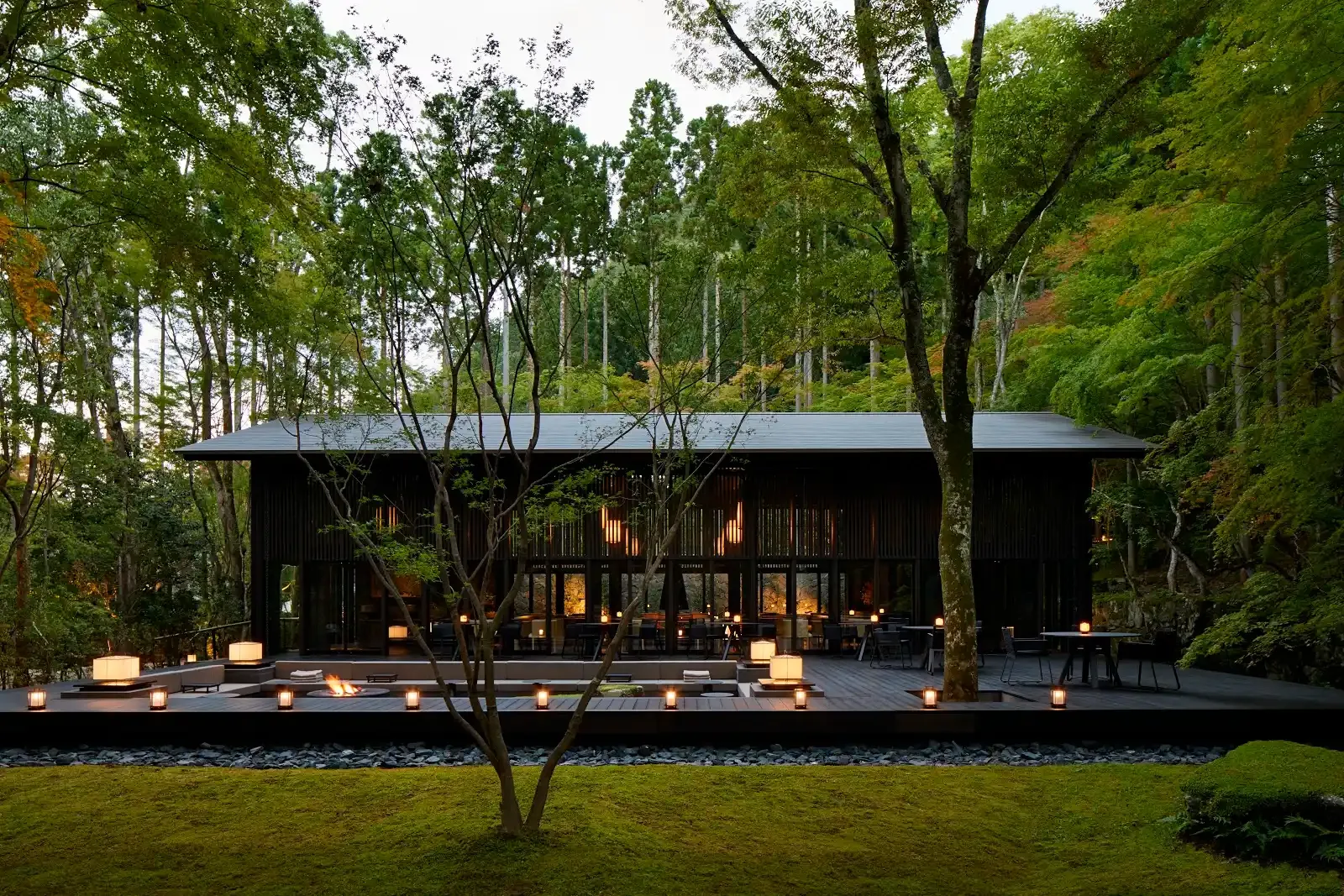
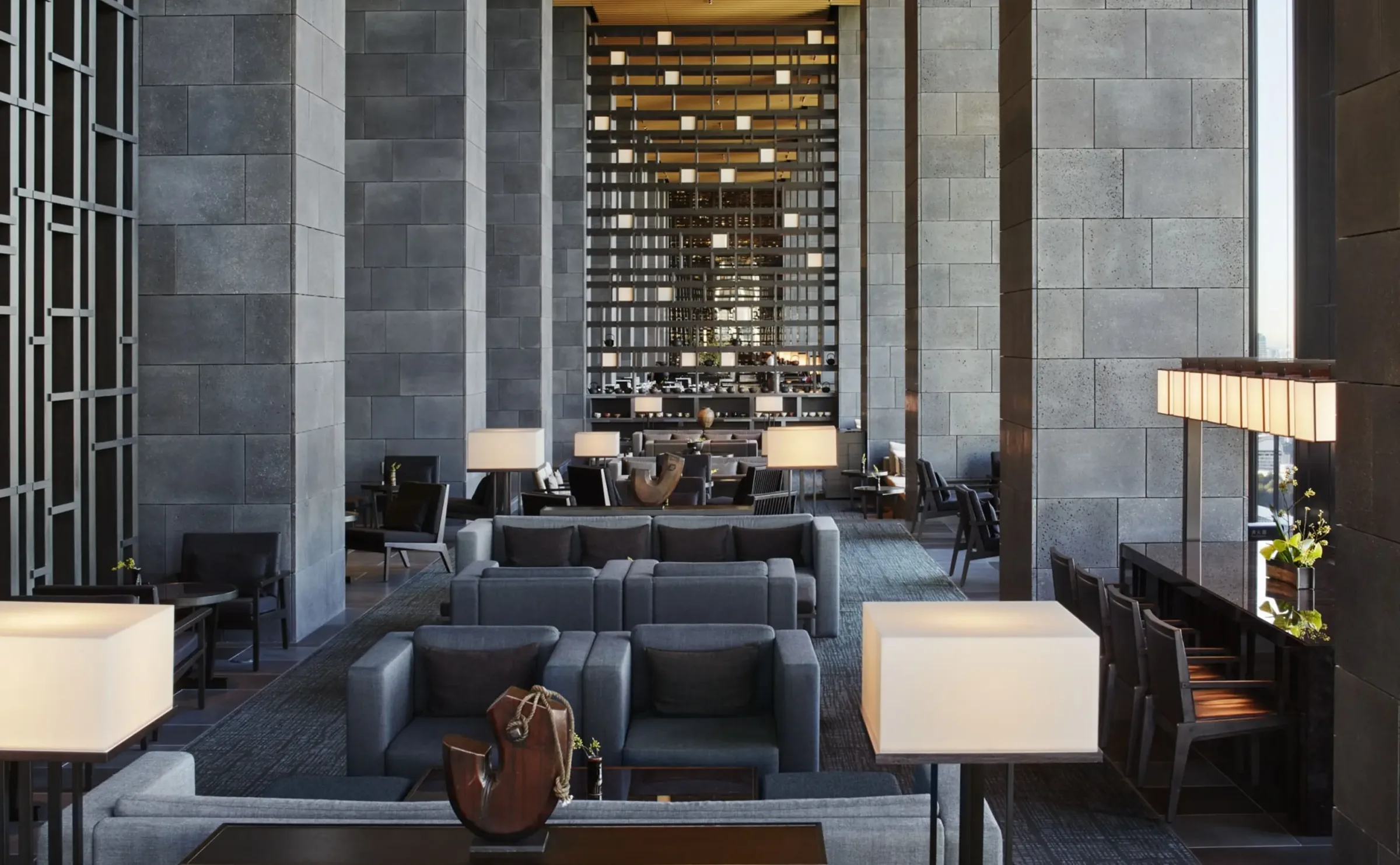
The three-to-four-hour check-in overhead cost is real but not absolute. There are destinations where the property itself justifies the disruption, and a longer stay at that property becomes the experience itself rather than a base for other activities. Aman Kyoto, set in the forested hills above Nanzenji, is one of them: three nights in the property produces a relationship with the garden, the tea house, and the forest path that a single night does not. Four Seasons Kyoto, backing onto the Higashiyama hills, operates similarly. The rule is that each hotel change must earn its disruption cost. A routing sequence of Aman Tokyo (four nights) → Shinkansen → Aman Kyoto (three nights) → return has two hotel changes and eleven days. It is not the most comprehensive Japan itinerary possible. It is the most immersive one at that property tier, and the guests who take it consistently report it as the version of Japan that stayed with them.
Route templates by trip length
7 nights: two bases only, Tokyo (4) and Kyoto (3), avoids the single most common mistake, adding a third base for one night. 10 nights: Tokyo (4), Hakone (2), Kyoto (4), which adds mountain recovery without a same-day pack-out. 14 nights: Tokyo (4), Hakone (2), Kyoto (4), plus Hiroshima or Kanazawa (3) with a final Osaka night before departure. Each template keeps hotel changes at or below one per three to four nights, which is the point where the check-in overhead (pack, transfer, check-in, orient, settle) stops eating trip days.
Transfer times and luggage forwarding
Tokyo–Kyoto by Shinkansen runs roughly 2h15; Kyoto–Hiroshima roughly 1h20; Tokyo–Hakone by limited express or private car roughly 90 minutes. Use takkyubin (same-day or next-day luggage forwarding, typically ¥2,000–3,000 per large bag) to send main luggage ahead to the next hotel and carry only an overnight bag on transfer days. This alone removes the worst part of the Shinkansen platform experience. Build a half-day buffer around any transfer that involves an early domestic flight; Japan's rail system is reliable, but flight connections into regional airports are not as forgiving.
Key facts
Mistakes each routing template avoids
- 7-night mistake avoided
- A third one-night base that adds a pack-out without adding a real experience
- 10-night mistake avoided
- Skipping mountain recovery and running Tokyo straight into Kyoto at full pace
- 14-night mistake avoided
- Encyclopaedic routing — 6+ cities that turn the back half of the trip into transit
- Rail logic
- Reserved seats on peak-season Shinkansen legs; walk-up risk rises sharply during cherry blossom and autumn foliage weeks
- Driver logic
- A private driver earns its cost on Hakone/Nikko day-trip legs where train-plus-bus adds 60–90 minutes each way
Frequently asked
What is the best Japan itinerary for 10 days?
For a first visit, three locations in ten days works well: Tokyo (four nights), Hakone (two nights), Kyoto (three nights), with the return from Osaka Kansai. This gives you the city at depth, a mountain and onsen night, and the cultural capital with enough time to see it slowly. Properties: Aman Tokyo or Four Seasons Otemachi, Gora Kadan in Hakone, Aman Kyoto or Four Seasons Kyoto.
How many cities should I visit in Japan in 2 weeks?
Four to five, maximum, if you want to inhabit rather than tick them. Tokyo, Nikko or Hakone, Kyoto, and one additional stop — Hiroshima, Kanazawa, or Osaka — is the right scope for 14 days. More than five locations means you are spending your trip in transit rather than in the destinations themselves.
What is a private Japan tour itinerary?
A private Japan itinerary differs from a tour in that every element — guide, transport, cultural access, restaurant reservations — is arranged specifically for your party rather than shared with other guests. You move at your pace, with a specialist guide for each location rather than one generalist across the whole trip, and you access moments that group tours cannot: early-morning temple entry, introduction-based ryokan placements, private kaiseki demonstrations.
Is Tokyo or Kyoto better for a luxury Japan trip?
They are structurally different and most well-built Japan itineraries include both. Tokyo is a city of extraordinary depth — art, architecture, cuisine, contemporary culture — anchored by properties like Aman Tokyo, Bulgari, and Four Seasons Otemachi. Kyoto is more culturally concentrated and quieter; its flagship addresses (Aman Kyoto, Four Seasons Kyoto, Tawaraya ryokan) are among the best hotel experiences in Asia. The routing question is which city you want to arrive into and which you want to leave from.
What is the Sunrise Izumo train and is it worth booking?
The Sunrise Izumo is Japan's last remaining overnight sleeper express, running Tokyo to Matsue on the San'in coast. A solo compartment or twin cabin departs at 22:00 and arrives the following morning. It is worth booking if your itinerary includes the western Honshu coast or Izumo Taisha. The journey itself — falling asleep in Tokyo and waking up in a different landscape — is a distinctive travel experience that no other Japan transit offers.