Advisor-grade Tokyo comparison: who should book Aman, who should book Janu, what each room hierarchy actually does, and when the opening-window timing matters.
Aman protects attention; Janu creates momentum. The right choice depends on whether the hotel should lower Tokyo's volume or generate social/wellness energy.
The essential difference between Aman Tokyo and Janu Tokyo
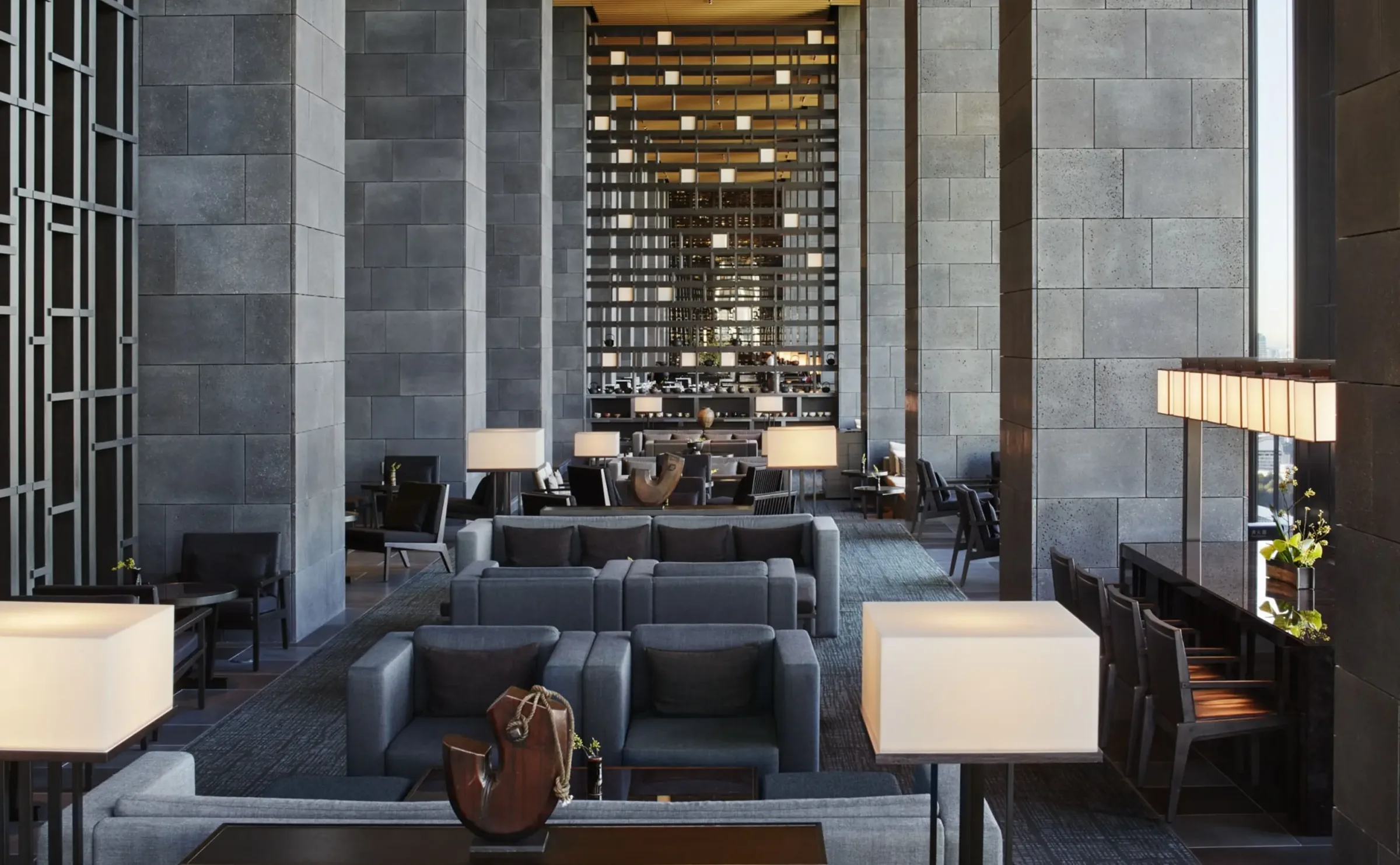
Aman Tokyo occupies the upper six floors of the Otemachi Tower: 84 rooms calibrated for restraint, with a lobby of 30-metre ceilings, washi paper screens, and views directly over the Imperial Palace gardens. The property's operating principle is subtraction: no background music, no crowd, no programming unless requested. Janu Tokyo opened in 2024 at Azabudai Hills, a purpose-built urban campus developed by Mori Building. Its 122 rooms face a different itinerary entirely: a 13,000-square-foot spa, eight restaurants and bars, and communal social spaces designed to draw guests out of their rooms rather than into them. Both carry Aman Group DNA, meaning the service philosophy, the design vocabulary, the commitment to understated luxury, but the intended guest experience is structurally opposite. Aman asks you to be still. Janu asks you to participate.
Which property suits a solo or couple traveller
For a solo guest or a couple whose Japan itinerary is built around cultural immersion, such as the Imperial Palace East Gardens, a private tea ceremony in Yanaka, kaiseki at Kanda, Aman Tokyo is the stronger anchor. The silence of the property carries over into the day: you leave ready to absorb the city rather than already stimulated. The Aman tea ceremony, conducted in a dedicated room off the lobby, is among the more considered cultural introductions available at a Tokyo hotel. At 84 rooms, the property almost never feels occupied, and the corridor-to-room transition is genuinely hushed. Janu is a correct choice for couples who want structured wellness alongside their Tokyo days. The Janu spa, at 13,000 square feet, is the largest in the city, and the property offers enough dining options to anchor several evenings without leaving the building. The Azabudai Hills location also places you near Mori JP Tower and its cluster of serious restaurants.
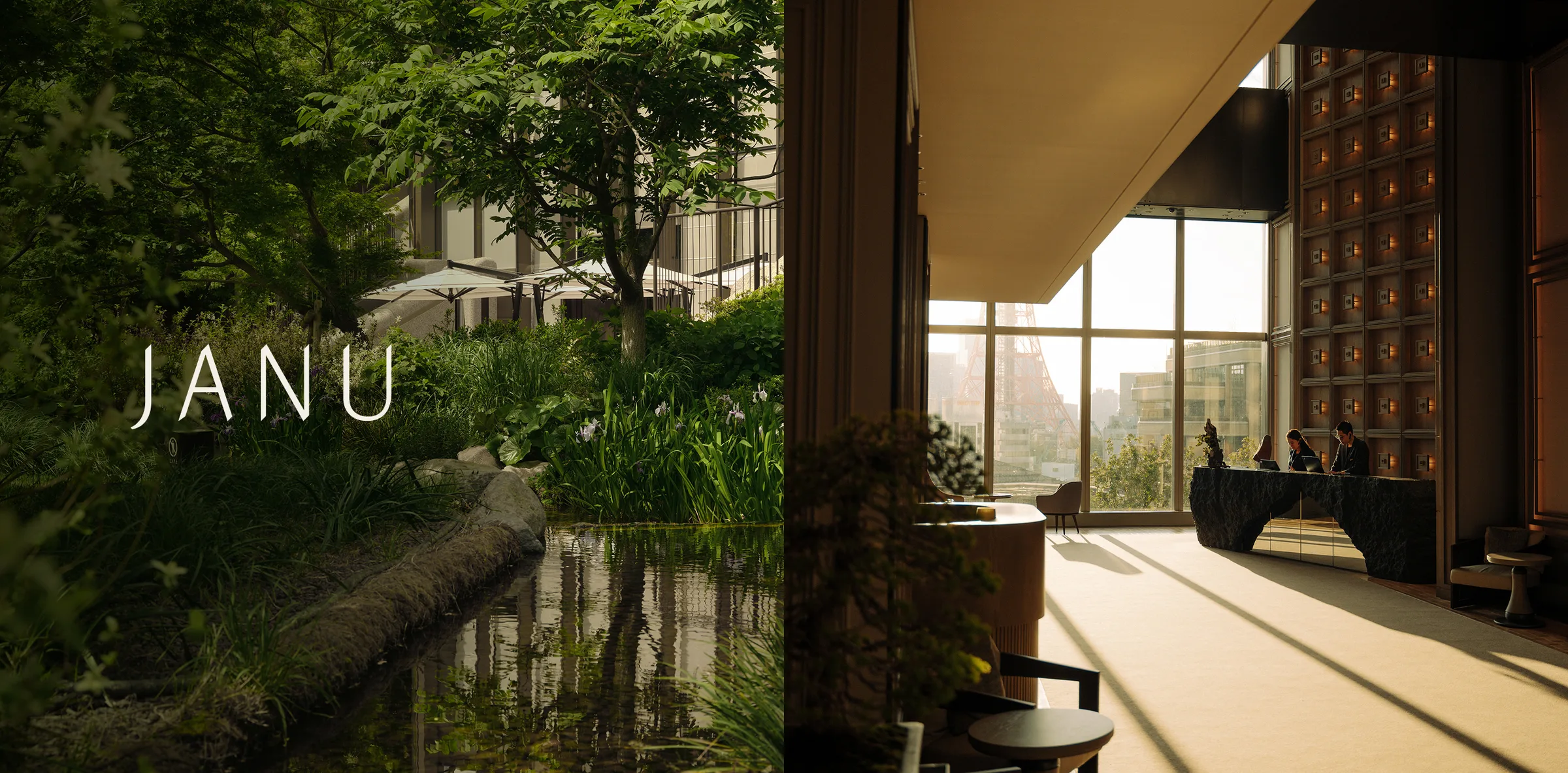
Photographs for this guide.
Which property suits a group or multi-generational trip
Janu is the clearer choice for groups of four or more, and the only viable option for multi-generational travel. Its communal spaces, including the all-day dining room, the pool terrace, and the spa treatment suite that accommodates couples and small groups, are designed for shared occupation in a way that Aman's contemplative corridors are not. The Azabudai Hills complex around Janu includes galleries, a cinema, and international restaurants within covered walking distance, which gives a group genuine evening optionality without requiring a transit decision. Aman Tokyo's 84-room footprint means adjacent rooms are rarely available for larger parties, and its service model is optimised for the individual guest rather than a group dynamic. For families travelling with children, Janu is also the more practical landing: it has the physical space and the dining variety that makes it workable across different ages and preferences.
Booking windows and rate strategy for both
Both properties fill their most desirable inventory through Virtuoso and Fora Preferred channels six to nine months before cherry blossom season (roughly March 20 to April 10) and autumn koyo (mid-November to early December). At Aman Tokyo, the entry Deluxe Room, which still delivers the full Imperial Palace view, is routinely underpriced relative to the City Suite once you account for the actual view differential between categories. The jump to the Palace Suite is significant in both rate and experience; the Palace View Suite in the middle of the hierarchy is the sweet spot for guests who want the view confirmed rather than hoped for. At Janu, the One-Bedroom Suite is the correct rate category for stays of four nights or more: the additional living space makes in-room evening time genuinely comfortable, and it represents the best value per night in the property's hierarchy. Both properties hold rates firmer than most Tokyo addresses during peak windows, so expect minimal discounting.
The room type that defines each property
At Aman Tokyo, the Imperial Suite facing the Palace gardens is the pinnacle: 247 square metres, a private tearoom, and the most unobstructed view of the East Gardens available from any hotel room in the city. The Classic Room on floors 33 to 37, though, delivers the same fundamental silence and the same stone-and-washi interior discipline at a fraction of the suite rate. It is the room type that proves the property's character rather than amplifies it. At Janu Tokyo, the Wellness Suite is definitional: it includes a private fitness area, direct access to the spa facilities, and a layout built around the body more than the view. For guests who have booked Janu specifically for its wellness positioning, the Wellness Suite is the only room category that fully justifies the address. Book it during the correspondence stage; waiting until check-in is too late, since very few of them exist.
Aman Tokyo vs Janu Tokyo — quick verdict
| Criterion | Aman Tokyo | Janu Tokyo | |
|---|---|---|---|
| Atmosphere | Quiet, protects attention | Energy, generates momentum | — |
| Location | Otemachi — financial district calm | Azabudai Hills — social/dining district | — |
| Room category to book | Deluxe Room for most stays; Aman Suite for occasion travel | Studio for most stays; Terrace Suite for longer/social stays | — |
| Wellness | Traditional onsen-style spa, slower pacing | Larger wellness floor, fitness- and recovery-forward | — |
| Dining | Fewer venues, quieter, reservation-only | More venues, social, walkable to Azabudai Hills dining | — |
| Families | Better for adult-paced, low-stimulation stays | Better for families wanting activity and dining variety | — |
| Avoid if | You want social energy and dining variety on-site | You want maximum quiet and traditional ceremony | — |
Key facts
Rate and availability note
- Rate confirmation
- Room-category rates shift with season and availability — confirm exact nightly rate and category availability directly before booking
- Booking lead time
- Both properties run tight availability in peak Tokyo season (spring cherry blossom, autumn foliage) — confirm months ahead for those windows
Frequently asked
Is Aman Tokyo better than Janu Tokyo?
Neither is objectively better — they are built for different kinds of stays. Aman Tokyo is the choice for guests who want silence, cultural depth, and the Imperial Palace view. Janu Tokyo is the choice for guests who want structured wellness, social energy, and a broader dining programme. The right property depends entirely on what the trip is for.
What is the Janu Tokyo spa like compared to Aman Tokyo?
Janu Tokyo's spa is the larger facility at approximately 13,000 square feet, with dedicated wellness suites, a full movement studio, and a broader treatment menu. Aman Tokyo's spa is smaller but deeply integrated into the property's philosophy of restraint — the treatments are excellent, but the spa is not a destination in the way Janu's is. If spa time is a primary reason for the trip, Janu is the correct placement.
Which Tokyo hotel is better for couples in 2026 — Aman or Janu?
For couples who want cultural immersion and quiet, Aman Tokyo. For couples who want a wellness-forward stay with programmed activity and evening dining options without leaving the property, Janu Tokyo. Both require booking six to nine months out for spring and autumn peak windows.
How far in advance should I book Aman Tokyo or Janu Tokyo?
For cherry blossom season (late March to mid-April) and koyo (mid-November to early December), nine months minimum. Virtuoso and Fora Preferred allocations at both properties move through advisory channels before public availability appears. Opening an itinerary in September for a spring trip is the standard timeline, not an early one.
Is the Janu Tokyo location good for sightseeing?
Azabudai Hills is well-positioned for Roppongi, Minato, and the Mori JP Tower complex. It is less directly convenient for the Imperial Palace, Yanaka, or the traditional cultural quarter than Aman's Otemachi location. Guests who want to move through traditional Tokyo on foot will find Aman's address more functional as a base.